




 Language
 English
 Español
HOT PRODUCTS
Content
- 1 What Is a Sparkling Water Tap System? (How It Works)
- 2 Installation Requirements: What You Need to Know Before Buying
- 3 Total Cost of Ownership (TCO): Sparkling Water Tap vs. Alternatives
- 4 CO₂ Cylinder Management: Buying vs. Renting vs. Refilling
- 5 Water Quality & Filtration: Why It Matters for Taste and Machine Life
- 6 Choosing the Right System: A Decision Matrix for Home, Office & Commercial Use
- 7 Maintenance & Troubleshooting: Keep Your System Running Smoothly
- 8 Key Certifications to Look For (UL, NSF, CE, CB)
The average American household spends over $200 a year on bottled sparkling water. A plumbed‑in sparkling water tap system cuts that cost to under $0.10 per liter while eliminating single‑use plastic. For hotels, restaurants, and offices, the economics are even sharper — one commercial unit can replace thousands of glass bottles and cut waste streams overnight. But a tap system is a permanent fixture, so the buying decision demands more than just price shopping; you must weigh installation requirements, ongoing CO₂ and filter expenses, water quality, and daily durability. This guide unpacks every variable so you can choose the right system the first time.
What Is a Sparkling Water Tap System? (How It Works)
A sparkling water tap system carbonates your water supply on demand. Inside a compact under‑counter or countertop unit, a carbonator tank mixes chilled water with food‑grade CO₂ under pressure. When you open the dedicated faucet, the water travels through a cooling module and exits as chilled still or sparkling water — depending on which handle you turn. A multi‑function “3‑in‑1” model adds instant boiling water as well, consolidating three appliances into one faucet.
The core components determine how well the system performs over a decade of daily use:
- Carbonator tank — usually stainless steel, sized for the expected peak flow
- CO₂ cylinder — pressurizes and injects gas into the water stream
- Filtration block — activated carbon, sediment, and sometimes reverse‑osmosis stages
- Chiller pump and compressor — maintains water at 4–8 °C
- Dedicated faucet — one or two levers, finished to match kitchen or bar décor
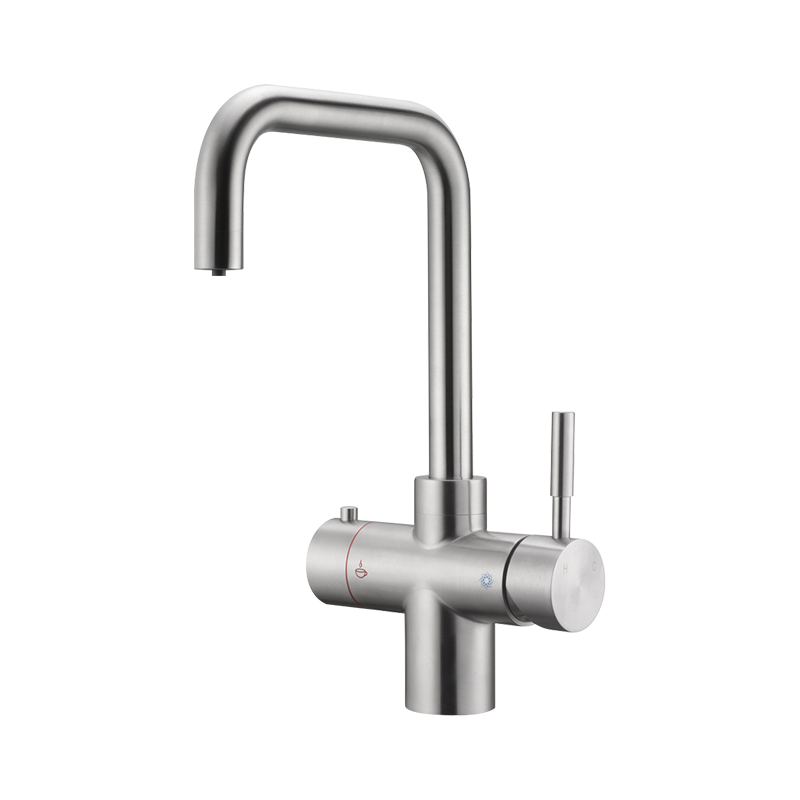
Dedicated sparkling‑water faucets are often installed alongside the main kitchen tap, while integrated “all‑in‑one” taps replace the main faucet entirely. Both styles pull water from the same filtration core, so the final taste hinges as much on the filter as on the carbonation quality.
Installation Requirements: What You Need to Know Before Buying
Installation is the single biggest make‑or‑break variable — even before cost. Plumbers quote a flat rate only after confirming clearances, power, and ventilation. Use the checklist below to assess your site before ordering a unit.
| Requirement | Home Under‑counter | Commercial Under‑counter | Countertop (Plug‑and‑Play) |
|---|---|---|---|
| Under‑sink clearance | H 45 cm, W 30 cm, D 40 cm | H 50 cm, W 40 cm, D 50 cm | No under‑sink space needed |
| Power supply | Standard 110 V outlet within 1 m | Dedicated 110 V circuit, GFCI | Same outlet as a kettle |
| Water line | 3/8″ cold‑water shut‑off with T‑adapter | 3/8″ or 1/2″ cold‑water, often dual shut‑off | Built‑in reservoir or 1/4″ tube |
| CO₂ cylinder location | Inside sink cabinet, well‑ventilated | Ventilated cabinet or adjacent mechanical room | Internal or beside the unit |
| Drain proximity | Within 1 m for drip‑tray drain (optional) | Highly recommended; floor drain ideal | Drip tray empties manually |
For any under‑counter model, you must also confirm the cabinet door closes without crimping the CO₂ hose. Commercial kitchens with high‑volume use should consult an HVAC technician to ensure the chiller’s compressor has adequate airflow; trapped heat can reduce carbonation consistency and shorten compressor life by years.
Total Cost of Ownership (TCO): Sparkling Water Tap vs. Alternatives
The sticker price of a tap system is only the starting line. Filter replacements, CO₂ refills, and the tiny but real electricity draw add up over a three‑year window. Comparing those numbers against bottled sparkling water and a countertop soda maker reveals the true cost per liter.
| Cost Item | Sparkling Water Tap System (Undercounter) | Bottled Sparkling Water (Store Brand) | Countertop Soda Maker (Manual CO₂ Cylinder) |
|---|---|---|---|
| Equipment purchase | $1,200–$2,500 (one time) | None | $80–$150 |
| CO₂ refills (3 years) | $360–$540 (2–3 cylinders/year) | N/A | $210–$360 |
| Filter replacements (3 years) | $240–$450 (2–3 sets/year) | N/A | N/A |
| Electricity (3 years) | $90–$130 | N/A | N/A |
| Total 3‑year TCO | $1,890–$3,620 | $2,190 (approx.) | $290–$510 |
| Cost per liter | $0.03–$0.07 | $0.40 | $0.05–$0.09 |
On a per‑liter basis, a tap system is the cheapest option after the initial outlay. The manual countertop machine looks cheaper overall but requires you to carbonate one bottle at a time and offers no continuous chilled water — a dealbreaker for offices or commercial front‑of‑house. Hospitality venues that serve 50–200 liters a day benefit from an undercounter commercial unit where the cost per liter can dip below $0.02.
CO₂ Cylinder Management: Buying vs. Renting vs. Refilling
CO₂ logistics are the biggest operating expense after the first year. Three common approaches exist, each with a distinct cost and convenience profile.
- Supplier‑leased cylinders (swap‑and‑go) — You pay a small annual rental and a swap fee each time you exchange an empty canister. Initial outlay is low, and the supplier handles hydro‑testing and certification. Best for businesses that want zero maintenance. Annual cost: $120–$200 for one cylinder in moderate use.
- Purchased cylinders (refill at gas depot) — You buy your own aluminum or steel cylinder and refill it at a welding‑supply or beverage‑gas dealer. Up‑front cost is $80–$150 for the bottle, but refills are the cheapest ($15–$25 per fill). You’re responsible for periodic hydro‑static testing (every 5 years). Annual cost: $60–$120, depending on consumption.
- DIY soda‑maker refill adapters — Some households repurpose small, disposable cartridges via aftermarket refill stations. This approach costs less per gram of CO₂ than brand‑name swaps but requires careful handling to avoid over‑pressurization. Not recommended for commercial settings due to inconsistent gas quality and safety risks.
For a busy café, the leased‑cylinder model removes liability and ensures 24‑hour stock. For a private home, owning a 2.6 kg cylinder and refilling it twice a year is often the most economical route.
Water Quality & Filtration: Why It Matters for Taste and Machine Life
Municipal water quality varies sharply between regions. Even within the same city, high mineral hardness or chlorine spikes can degrade the carbonator, scale the chiller, and introduce off‑flavors. The three most common water issues — and the right filtration countermeasures — are:
- Hardness (calcium carbonate) — Causes lime‑scale buildup inside the carbonator tank and cooling coil. Over time, scaling reduces carbonation efficiency and can block the chiller entirely. A water softener or an inline polyphosphate scale inhibiter is mandatory if total hardness exceeds 120 mg/L.
- Chlorine and chloramine — Municipal disinfectants react with the carbonator’s internal components and produce a swimming‑pool taste. High‑quality activated carbon block filters remove chlorine effectively. For chloramine, a catalytic carbon cartridge is required.
- Sediment and fine particulates — Silt, rust, or pipe scale can clog the solenoid valve and diffuser stone, leading to intermittent flow and weak bubbles. A 5‑micron sediment pre‑filter placed before the main carbon filter solves this for a few dollars a year.
Manufacturers’ warranties often exclude damage from untreated hard water. If your tap system is going into a commercial kitchen, invest in an under‑sink reverse‑osmosis boost pump that feeds the carbonator with consistently low‑TDS water. The improved taste directly translates to happier customers and fewer service calls.
Choosing the Right System: A Decision Matrix for Home, Office & Commercial Use
A residential kitchen, a 20‑person office, and a 120‑seat restaurant have utterly different flow demands, space budgets, and tolerance for downtime. Matching the system to the usage envelope avoids an over‑engineered install that costs too much or an under‑spec’d machine that runs dry during lunch rush.
| Use Case | Daily Sparkling Water Demand | Recommended System Type | Key Features to Prioritize | Example Configuration |
|---|---|---|---|---|
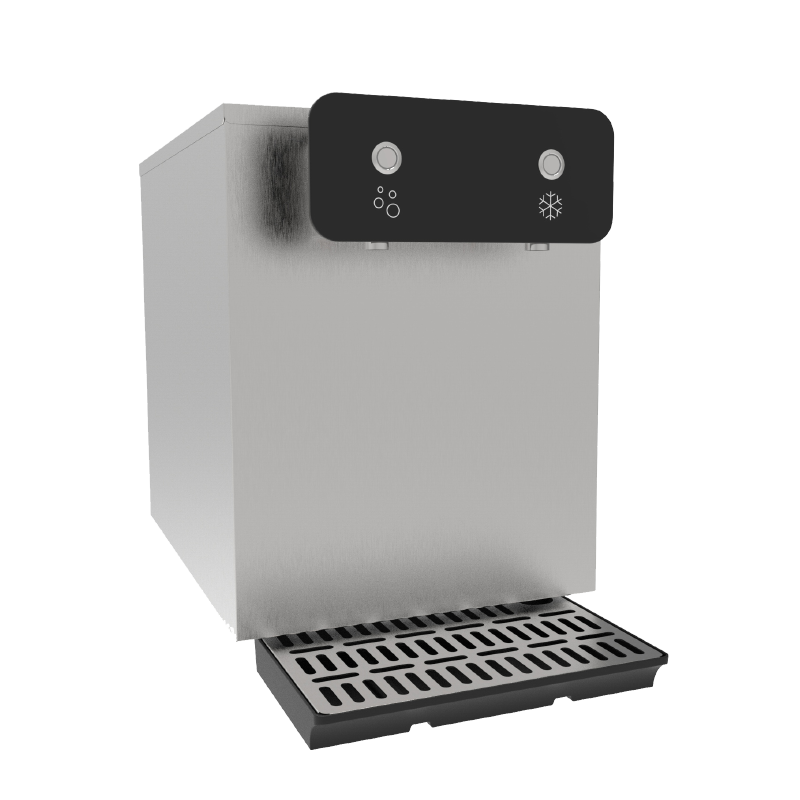
| Home (family of 4) | 3–8 liters | Under‑counter, single‑faucet | Compact chiller, quiet compressor, simple filter swap | High‑capacity home undercounter dispenser with built‑in carbonation – ideal for daily family hydration without sacrificing cabinet space. FCD12A home sparkling unit |
| Small office (10–30 people) | 10–25 liters | Under‑counter or freestanding floor unit | Fast recovery chiller, touch‑button operation, large CO₂ cylinder (2.6 kg or larger) | A dual‑mode undercounter system that handles both sparkling and chilled still water reduces bottle deliveries and breakroom clutter. Office undercounter model FCD12A |
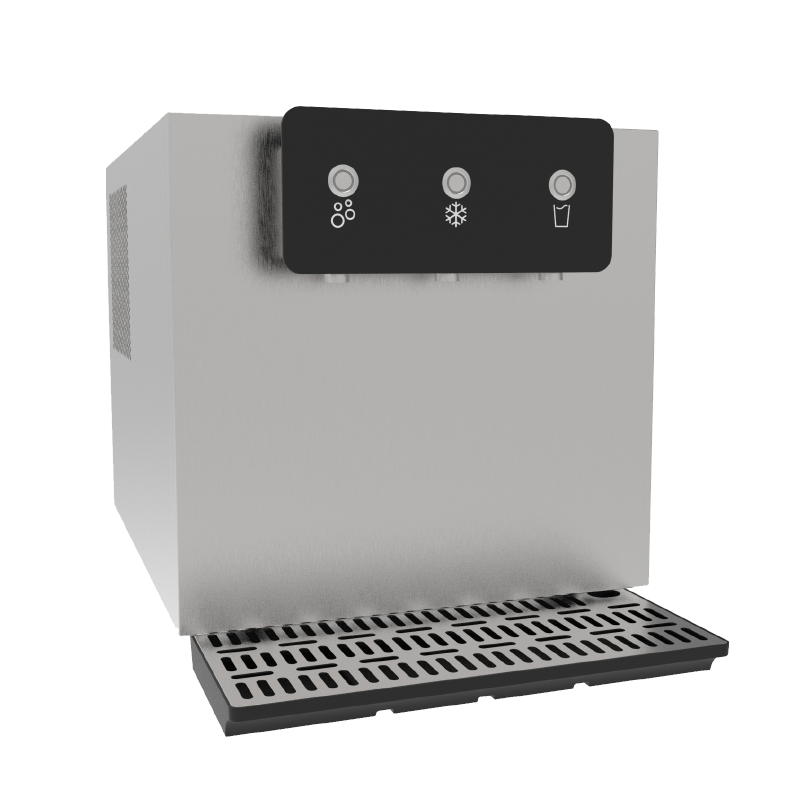
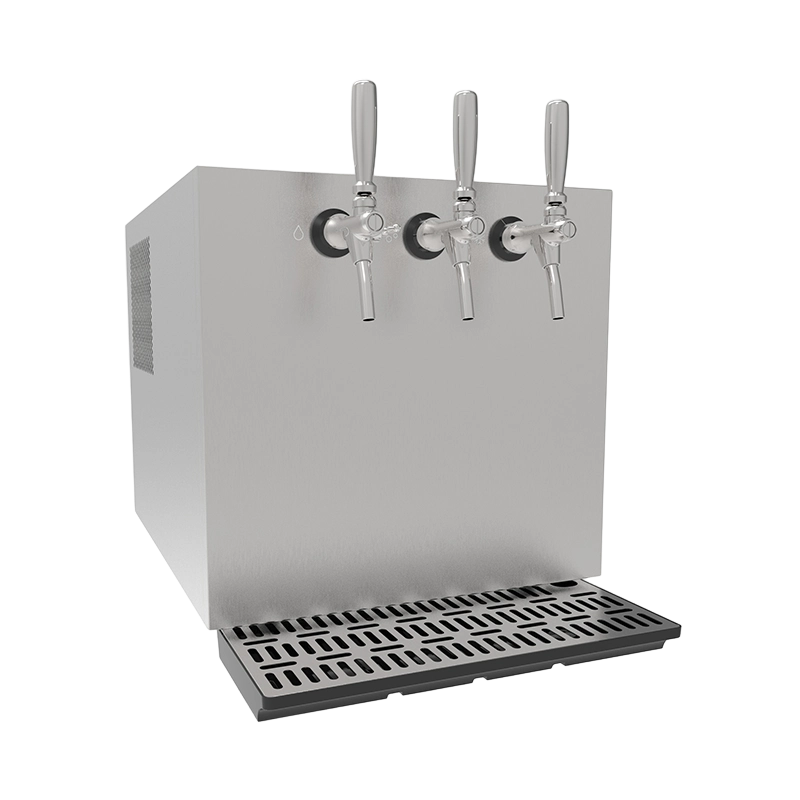
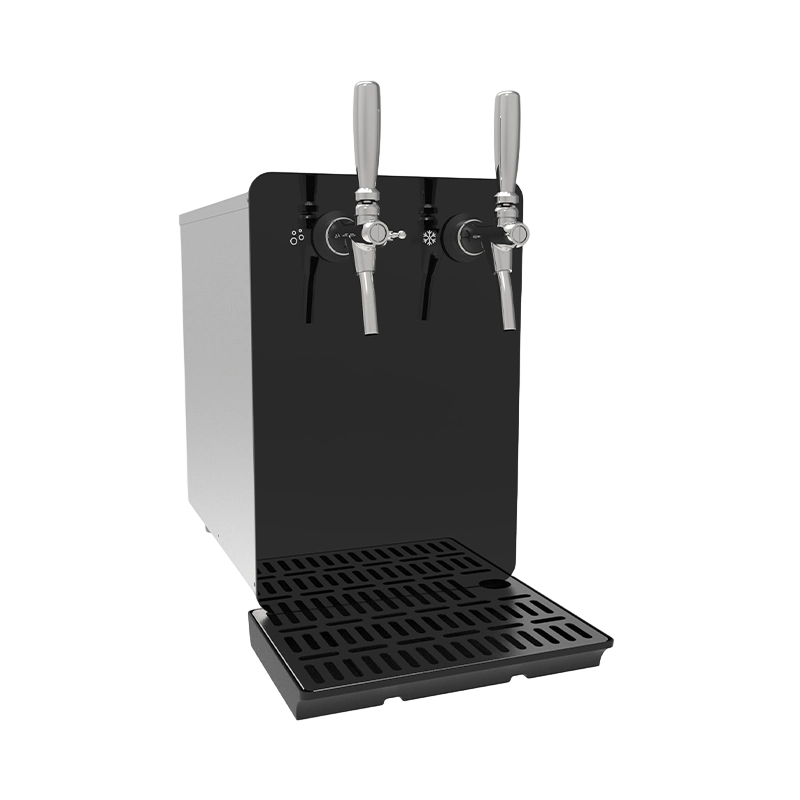
| Restaurant / Hotel / Bar | 40–200 liters | Countertop or under‑counter commercial unit with dual taps | High flow rate (≥30 L/hr), NSF‑certified contact surfaces, rugged stainless steel cabinet, quick CO₂ swap | A dual‑tap countertop system that serves chilled still and sparkling water side by side can handle back‑to‑back orders during peak service. BST60C dual‑tap commercial system |
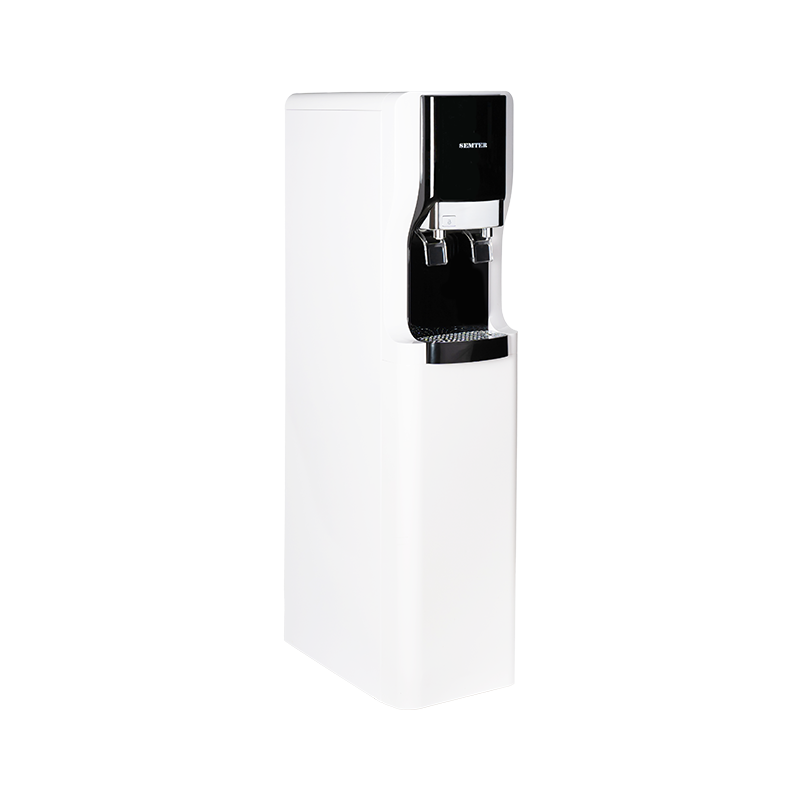
Floor‑standing units with multiple faucets are worth considering for hotel lobbies or convention centers where a single station must serve dozens of guests simultaneously. Their larger chillers maintain temperature even under continuous draw, and the internal CO₂ plumbing can feed two or three independent taps.
Maintenance & Troubleshooting: Keep Your System Running Smoothly
Routine care is straightforward, but ignoring it leads to weak bubbles, off‑tastes, and — in worst cases — a burnt‑out compressor. Follow this maintenance calendar and refer to the troubleshooting table when problems surface.
Recommended Maintenance Calendar
- Every 3–4 months — Replace the sediment pre‑filter and the carbon block cartridge. Set a recurring calendar alert; filter life depends on local water quality and daily throughput.
- Every 6 months — Inspect the CO₂ high‑pressure hose for cracks or hardening. Brush soapy water onto the cylinder‑regulator connection to check for micro‑leaks (bubbles indicate a loose fitting).
- Annually — Have a qualified technician flush the internal water lines with food‑grade sanitizer and verify the carbonation pressure setting. If the system has a chiller, clean the condenser fins with compressed air or a soft brush.
Common Problems and Solutions
| Symptom | Possible Causes | What to Do |
|---|---|---|
| Weak or no carbonation | CO₂ cylinder empty; regulator set too low; clogged diffuser | Weigh the cylinder (empty value is stamped on the neck); adjust regulator to 345 kPa (50 psi); clean or replace the diffuser stone |
| Sparkling water tastes metallic or earthy | Expired carbon filter; biofilm in dispense line; water supply change | Replace all filters; sanitize the faucet spout and internal line with manufacturer‑approved cleaner; test municipal water report |
| Machine cycles on and off frequently | Insufficient cabinet ventilation; dirty condenser coil; refrigerant leak | Ensure 10 cm clearance around the unit; clean condenser fins; call service technician if cycling persists |
| Water leaks from under the unit | Loose push‑fit fitting; cracked internal tube; drain blockage | Tighten all visible connectors; replace any brittle tubing; clear the drip‑tray drain line |
| Faucet drips after closing | Worn ceramic cartridge or debris under the seal | Remove the faucet handle and clean the cartridge; replace if necessary |
| No water flows at all | Clogged solenoid valve; supply shut‑off turned off; frozen chiller block | Check the shut‑off valve under the sink; inspect and clean the solenoid screen; allow the chiller to reach room temperature before restarting if it froze |
Keep a maintenance log — especially for commercial units — recording filter changes, CO₂ swaps, and any service visits. This documentation is often required for NSF certification audits in food‑service operations.
Key Certifications to Look For (UL, NSF, CE, CB)
Certifications are not marketing stickers; they are independent verification that the equipment meets electrical safety, sanitation, and materials standards. For any commercial installation, these marks separate equipment that passes health‑department scrutiny from units that will be red‑tagged on opening day.
- UL (Underwriters Laboratories) — Tests the entire electrical assembly for fire, shock, and mechanical hazard risks. UL‑listed equipment satisfies most North American building codes. Without it, a plumber may refuse to wire the unit.
- NSF/ANSI 42, 53, or 61 — Covers material safety and contaminant reduction. NSF 61 ensures the water‑contact materials don’t leach harmful substances; NSF 53 addresses specific health contaminants like lead and cysts. Commercial kitchens must use NSF‑certified fixtures.
- CE Marking — Mandatory for products sold in the European Economic Area. Affirms compliance with EU health, safety, and environmental directives. Units bearing CE typically meet stringent electromagnetic compatibility and pressure‑vessel standards.
- CB Scheme — An international network of testing labs that mutually recognize each other’s safety test reports. CB certification accelerates approval for global hotel chains that require uniform safety documentation across multiple countries.
Before purchasing, ask the supplier to provide copies of the most recent test reports — not just the certificate logo. A valid certification includes the lab’s name, the tested model number, and the date of issue. This due diligence protects you from sub‑standard components that could fail silently over time.

-1.png "3-Mode Undercounter Sparkling Water Dispenser")
 ADDRESS
 CONTACT
 EMAIL
EMAIL