




 Language
 English
 Español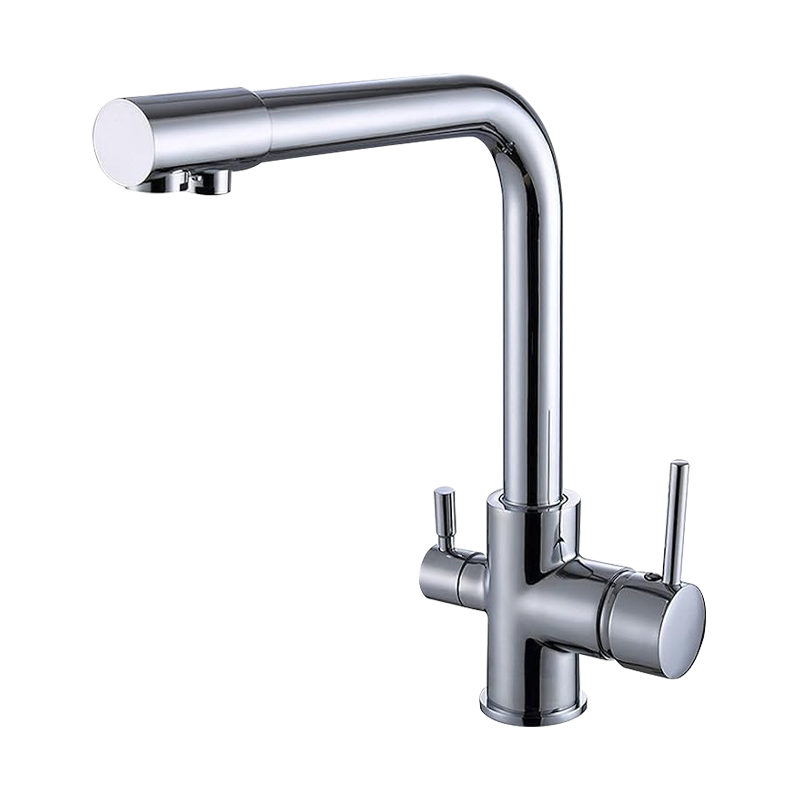
HOT PRODUCTS
Content
- 1 What Is a Sparkling Water Filter and How Does It Work?
- 2 The 3 Main Types of Sparkling Water Filters (With Pros & Cons)
- 3 Installation Requirements: Countertop vs. Undercounter vs. Freestanding
- 4 Filtration Technology Deep Dive: RO vs. UF vs. Carbon
- 5 The True Cost of Ownership: Filters, CO₂, and Electricity Over 3 Years
- 6 Commercial-Grade Options: What to Look for in High-Volume Settings
- 7 Maintenance Tips: How to Extend the Life of Your Sparkling Water Filter
The average U.S. household spends over $600 per year on bottled sparkling water. That number jumps well past $1,200 for a small office that keeps bottles stocked in the fridge. A sparkling water filter system — one that purifies tap water and carbonates it on demand — can cut that expense by 70% or more, usually paying for itself within 18 months. The catch: not all systems work the same way, and picking the wrong type leads to CO₂ cylinder swaps every two weeks or a filter that chokes on hard water after six months.
This guide breaks down the three dominant architectures, digs into real installation requirements, and lays out a three-year total cost of ownership so you can match the hardware to your water, your space, and your volume. No theory — just the criteria that determine whether a unit thrives or becomes an expensive paperweight.
What Is a Sparkling Water Filter and How Does It Work?
A sparkling water filter isn't a standalone carbonator with a pour‑over pitcher. It’s an integrated appliance that combines multi‑stage water filtration with an on‑demand CO₂ injection system, all fed directly from your cold‑water line. Water enters the unit, passes through sediment and activated carbon stages to remove chlorine, taste, and odor, then moves through a finer membrane — usually reverse osmosis (RO) or ultrafiltration (UF) — before hitting a stainless‑steel chilling tank. Once the water is cold, a precision regulator injects food‑grade CO₂, and the carbonated water exits through a dedicated faucet or push button.
That sequence matters. Filtering first protects the carbonation module from scale and sediment. Chilling before carbonation lets the water hold more dissolved CO₂, which means sharper bubbles and fewer refills. Most household‑grade units deliver between 2 and 4 liters of chilled sparkling water per hour; commercial models push 15 to 30 liters without overheating the compressor. The internal CO₂ cylinder — either a standard threaded 60 L bottle or a proprietary cartridge — typically lasts between 60 and 120 liters of finished sparkling water, depending on carbonation level and water temperature.
The 3 Main Types of Sparkling Water Filters (With Pros & Cons)
Three configurations dominate the market, and each one forces a different set of trade‑offs around upfront cost, counter real estate, and ongoing maintenance. The table below maps them head to head.
| Type | Initial Cost (USD) | Installation Complexity | Filtration Quality | CO₂ Cost per Liter | Typical Location |
|---|---|---|---|---|---|
| Countertop RO Sparkling (all‑in‑one) | $500 – $900 | Plug‑and‑play; needs counter space and power outlet | High (RO removes TDS, PFAS, heavy metals) | $0.08 – $0.12 | Home kitchen, breakroom |
| Undercounter Faucet System | $1,200 – $2,500 | Moderate‑high; requires under‑sink space, dedicated faucet hole, power, and drain access | High (often multistage with post‑carbon polish) | $0.10 – $0.15 | High‑end residence, office pantry |
| Standalone Carbonator + External Filter (e.g., pitcher) | $80 – $200 | Minimal; no plumbing connection | Low‑moderate (carbon filter only, no membrane) | $0.18 – $0.25 (due to smaller, pricier CO₂ cylinders) | Rental apartment, occasional use |
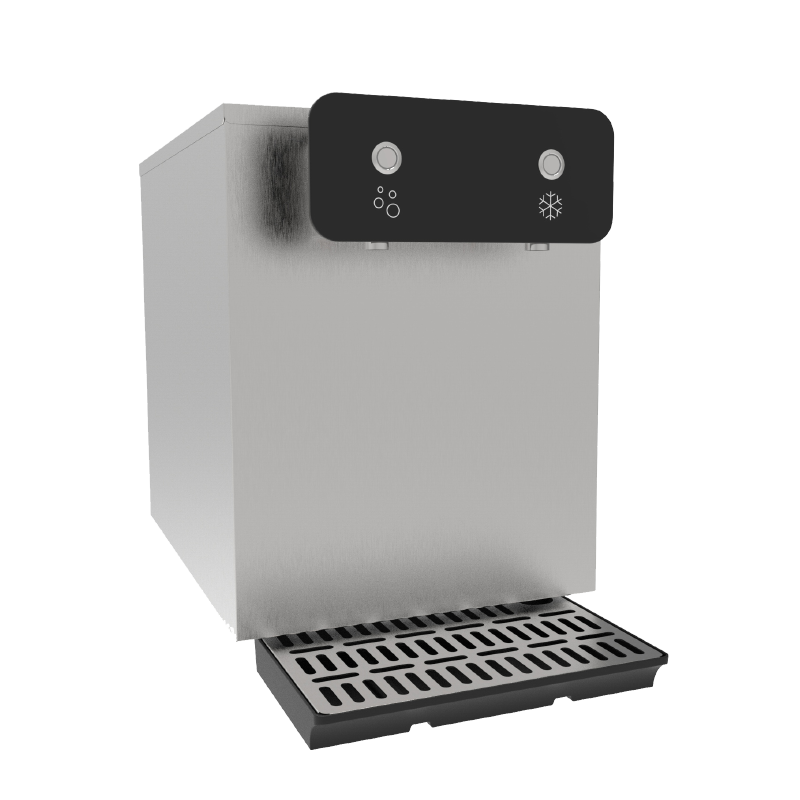
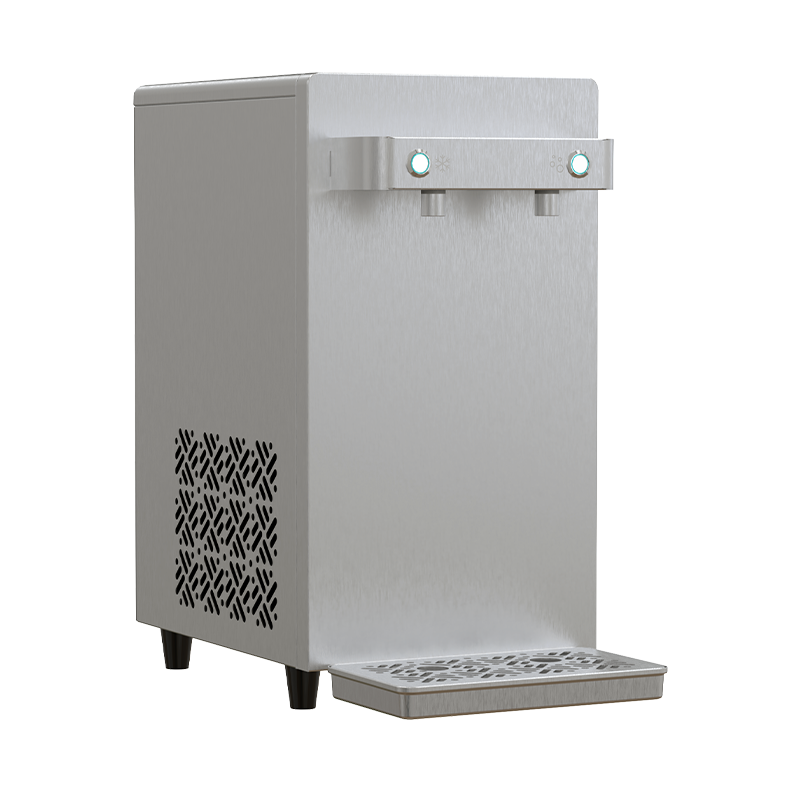
The countertop RO unit gives you the lowest total cost per liter and the simplest setup, but it occupies 12 to 18 inches of counter width and needs a nearby electrical outlet. A dedicated undercounter system hides everything below the sink, frees up the counter, and lets you dispense chilled still, sparkling, and sometimes hot water from a single elegant faucet — yet the install often requires drilling a new faucet hole and routing a drain line for the RO membrane. The standalone carbonator can work anywhere, but you’ll be refilling the water bottle and swapping CO₂ cartridges far more often, and the carbon block pitcher filter cannot touch dissolved solids or PFAS. For anyone consuming more than 2 liters of sparkling water per day, the latter becomes an exercise in patience and logistics.
Installation Requirements: Countertop vs. Undercounter vs. Freestanding
Installation is where sparkling water filter projects either sail through in an afternoon or derail into a weekend of plumbing frustration. The checklist below summarizes the prerequisites for the three main form factors.
- Countertop (plug‑and‑play): One grounded 120‑V outlet within 3 feet; a flat surface capable of holding 30–50 lbs; no plumbing connection — you fill the internal tank manually. Ideal for renters.
- Undercounter (hard‑plumbed): Cold‑water shut‑off valve under the sink; minimum 20 psi incoming water pressure (40–60 psi preferred); a GFCI outlet below the counter; at least 18"H x 12"W x 12"D cabinet space; an existing 1‑3/8" faucet hole or willingness to drill one; and a drain saddle or air‑gap connection for RO reject water.
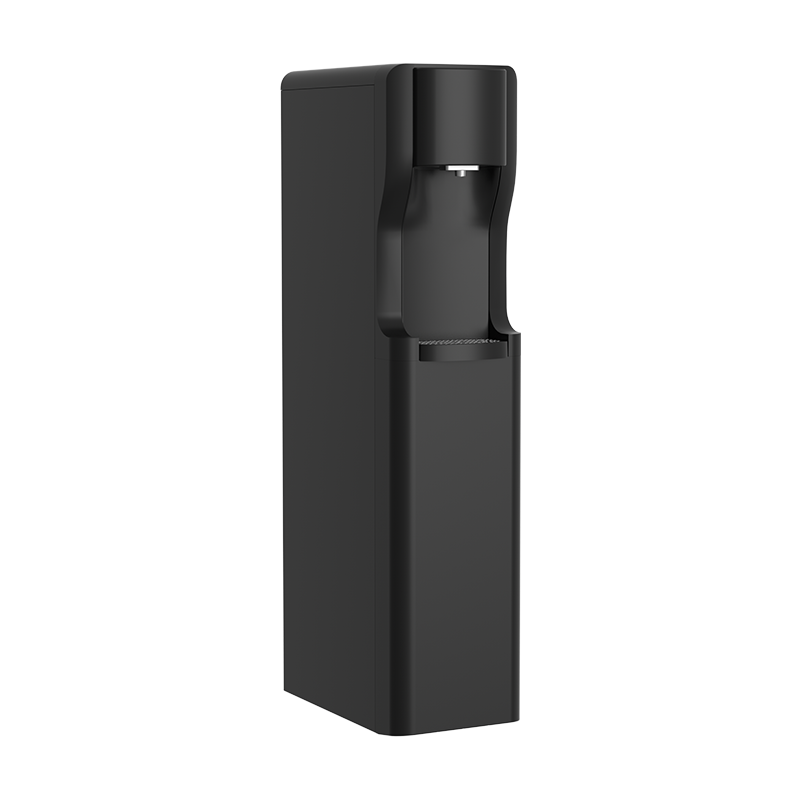
- Freestanding floor unit (commercial): Dedicated 20‑A circuit; floor drain or drip tray; water pressure 30–90 psi; clearance of 4 inches on each side for ventilation.
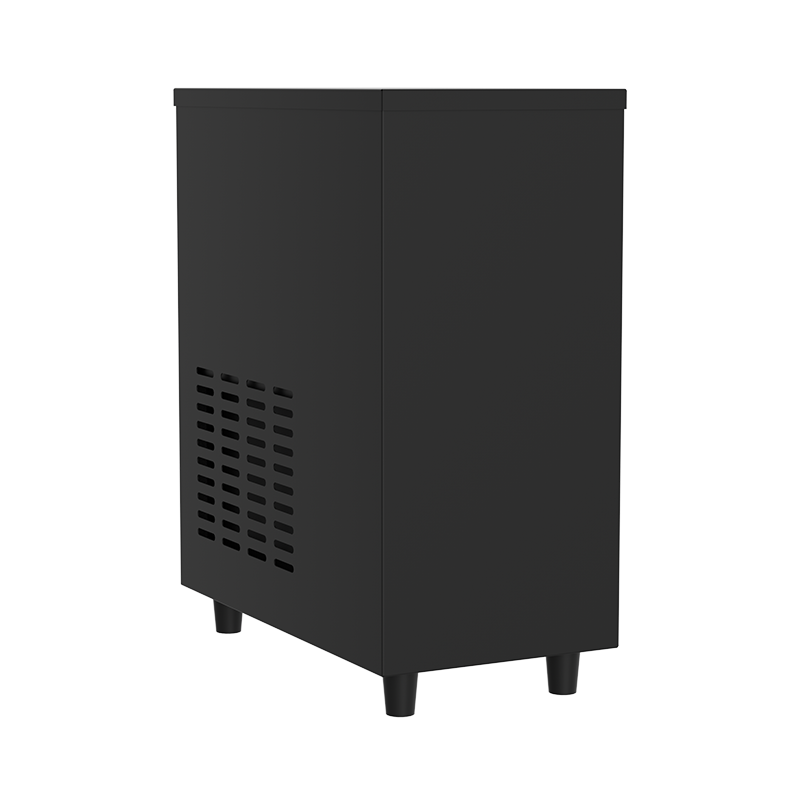
Undercounter systems cause the most surprises. The RO membrane wastes anywhere from 3 to 5 gallons for every gallon of filtered water, and that reject water needs a path to the drain. If your local code requires an air gap, the plumbing extends further. Also, if you have hard water (>180 ppm CaCO₃), install a compatible scale inhibitor before the unit; without it, the RO membrane’s lifespan drops from 24 months to as little as 8 months. A pre‑purchase pressure gauge check costs $10 and avoids a no‑flow scenario after the system is bolted in. For offices that need a concealed but high‑capacity setup, a compact undercounter office system with dry‑cooling technology keeps the compressor quiet while delivering up to 15 liters per hour.
Filtration Technology Deep Dive: RO vs. UF vs. Carbon
The “filter” inside a sparkling water system determines what lands in your glass. Three core technologies appear, each with a distinct job.
| Technology | Pore Size (micron) | Removes TDS | Removes Bacteria/Virus | Removes PFAS & Heavy Metals | Waste Water | Typical Filter Life |
|---|---|---|---|---|---|---|
| Sediment + Carbon Block | 0.5 – 5 | No | No | Partial (carbon adsorbs some) | None | 6 – 12 months |
| Ultrafiltration (UF) | 0.01 – 0.1 | No | Yes (bacteria, cysts) | Limited (no ionic removal) | None (or tiny flush) | 12 – 24 months |
| Reverse Osmosis (RO) | 0.0001 | Yes (90–99%) | Yes (virus, bacteria) | Yes (PFAS, lead, arsenic, chromium‑6) | Yes (3:1 to 5:1 ratio) | 24 – 36 months (membrane) |
RO is the gold standard for taste and safety because it strips dissolved solids, pharmaceuticals, and perfluoroalkyl substances. If your municipal water report shows TDS above 250 ppm or you’re on a well with trace metals, nothing short of RO will produce genuinely neutral‑tasting sparkling water. The trade‑off is the reject water stream and a slower flow rate — typically 0.5 to 1 liter per minute without a pressure pump. UF handles microorganisms without dumping water down the drain, but it leaves minerals in place. That works well with moderately hard water that doesn’t cause scaling, and it preserves a mineral mouthfeel some people prefer for still water. Carbon‑only systems are found in entry‑level standalone carbonators; they improve taste and remove chlorine, but they won’t protect against dissolved contaminants. A unit that pairs RO with a post‑carbon polishing stage and an optional UV‑LED loop gives the cleanest base for carbonation and keeps the system’s internal lines free of biofilm.
The True Cost of Ownership: Filters, CO₂, and Electricity Over 3 Years
Purchase price tells only a fraction of the story. Over three years, consumables often eclipse the hardware. The table below models a household consuming 4 liters of sparkling water per day.
| Cost Component | Countertop RO Sparkling | Undercounter Faucet | Standalone Carbonator + Pitcher Filter |
|---|---|---|---|
| Hardware (upfront) | $750 | $1,750 | $150 |
| Filter replacements (3 years) | $330 (membrane every 2 yrs + prefilters yearly) | $300 (annual filter set) | $180 (carbon filters every 2 months) |
| CO₂ (3 years) | $480 (standard 60 L cylinder every 50 days at $22) | $540 (proprietary cylinder every 45 days at $30) | $720 (small cartridge every 14 days at $12) |
| Electricity (3 years at $0.12/kWh) | $95 | $115 | $0 |
| Total 3‑Year Cost | $1,655 | $2,705 | $1,050 |
| Cost per Liter (sparkling) | $0.38 | $0.62 | $0.24 (still) to $0.41 (sparkling) |
At first glance, the standalone carbonator looks cheapest. But its cost per sparkling liter is slightly higher than the countertop RO unit once you account for CO₂ frequency, and the water quality is significantly lower — the pitcher filter can’t remove TDS or heavy metals. The undercounter faucet costs the most, yet it adds still chilled and often near‑boiling water, replacing a kettle and a water cooler. For a family already spending $600 per year on bottled sparkling water, the countertop RO system reaches break‑even around month 15. An office that consumes 20 liters per day will recover the hardware cost of a horeca dual‑tap sparkling and chilled system within six months just from eliminating bottled water deliveries.
CO₂ cylinders are the recurring expense most buyers underestimate. Standard threaded 60‑liter bottles are widely available at welding supply stores and home‑brew shops, typically $18–$25 per exchange. Proprietary cartridges lock you into one supplier and often cost 30–50% more per gram of CO₂. Before you buy, verify the cylinder type and locate two local sources; if you can’t find a refill within a 15‑minute drive, the convenience gap becomes a regular frustration.
Commercial-Grade Options: What to Look for in High-Volume Settings
Restaurants, hotel floors, and co‑working spaces push sparkling water filters into a different performance class. A residential unit rated for 2 liters per hour will stall when a lunch crowd hits the dispenser 30 times in 10 minutes. Volume dictates everything.
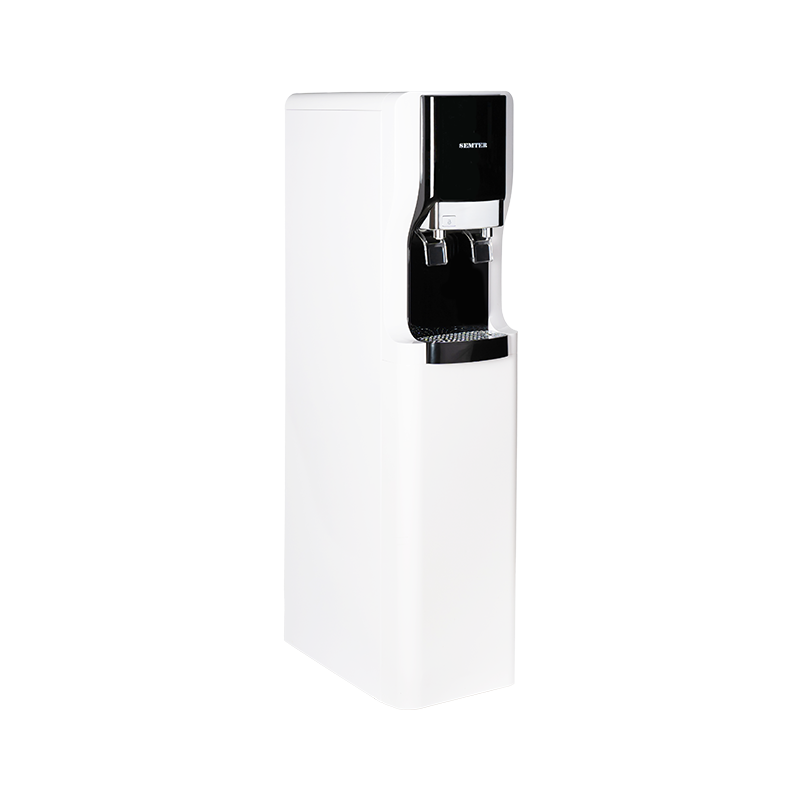
For a café or bar serving 80–120 glasses in a morning rush, look for a minimum output of 15 liters per hour of chilled sparkling water and a compressor with at least 1/5 HP. Continuous duty rating — the ability to run the compressor without thermal shutdown — becomes more important than peak temperature. A dry‑cooling system, which uses air convection instead of a water‑cooled condenser, avoids tying the unit to a constant cold‑water supply and simplifies maintenance. Hotels deploying units on guest floors tend to prefer freestanding floor models with dual or triple faucets (sparkling, chilled still, ambient) and a self‑contained drain tray that hides condensation.
NSF/ANSI Standard 58 certification is the key credential here. It verifies that the RO system reduces a specific list of contaminants — lead, cysts, nitrate, and others — not just that the materials are safe. For any commercial installation open to the public, insist on third‑party certification of both the filter and the wetted plastics. A home countertop RO sparkling filter may share the same filtration stages as its commercial cousin, but the commercial chassis adds thicker stainless steel, a faster‑chilling compressor, and a CO₂ manifold rated for hundreds of cycles per day.
Maintenance Tips: How to Extend the Life of Your Sparkling Water Filter
Most sparkling water filter failures trace back to three neglected items: the pre‑sediment filter, the RO membrane flush schedule, and the CO₂ regulator O‑ring. A 10‑minute monthly routine can push the system’s service life well past 10 years.
- Replace the sediment pre‑filter every 6 months, even if the carbon block still looks clean. Sediment loading reduces flow to the RO membrane, which forces the pump to work harder and accelerates membrane compaction.
- Sanitize the internal water path once a year. Drain the chilling tank, run a food‑grade sanitizing tablet (many manufacturers sell a standardized kit) through the line, and flush with 2 gallons of filtered water. This prevents slime that causes off‑flavors in sparkling output.
- Inspect the CO₂ bottle connection O‑ring every time you swap cylinders. A dried‑out ring leaks gas slowly; you’ll lose half a cylinder’s CO₂ before you notice the bubbles have softened. Keep a spare O‑ring kit in the cabinet.
- Check drain lines quarterly if you have an undercounter RO system. A kinked or algae‑clogged drain saddle backs up, floods the cabinet, and can contaminate the filtered water line.
- When sparkling water tastes flat or metallic, isolate whether it’s a CO₂ issue (empty cylinder, regulator mis‑set) or a filter issue (exhausted carbon, ruptured membrane) by tasting the still water from the same tap. If still water tastes fine, the fault is in the carbonation circuit. If still water tastes off, change the post‑carbon and pre‑filters and reassess.
Homeowners on well water with high iron or manganese should add a whole‑house oxidizer before the sparkling system; iron precipitates foul RO membranes and create a breeding ground for iron bacteria inside the chiller tank. Municipal users with chloramine should confirm that the filter cartridge contains catalytic carbon, not just standard activated carbon, or the chloramine will degrade the thin‑film composite RO membrane within 12 months.

 ADDRESS
 CONTACT
 EMAIL
EMAIL