




 Language
 English
 Español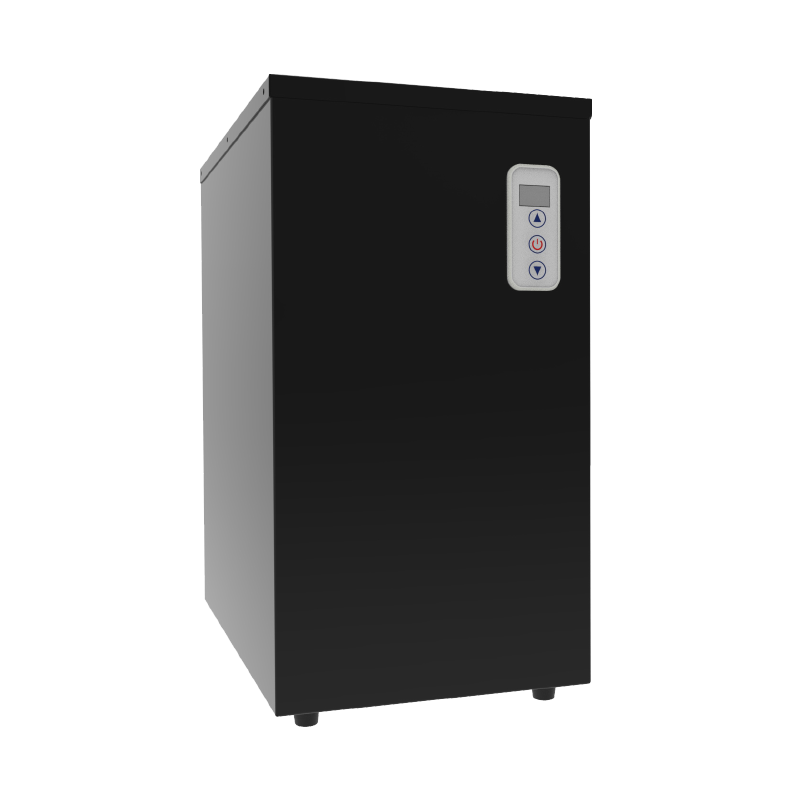
HOT PRODUCTS
Content
- 1 Why a Still and Sparkling Water Dispenser Makes Sense
- 2 How Still and Sparkling Water Dispensers Work
- 3 Types of Still and Sparkling Water Dispensers
- 4 The Real Cost Comparison: Dispenser vs. Bottled Water
- 5 Maintenance: What a Still and Sparkling Dispenser Actually Needs
- 6 Choosing the Right Still and Sparkling Water Dispenser
Why a Still and Sparkling Water Dispenser Makes Sense
Not everyone wants bubbles in every glass. A still and sparkling water dispenser solves that problem by delivering both options — filtered, chilled still water and on-demand carbonated water — from a single unit. Whether you are outfitting a family kitchen, an open-plan office, or a busy restaurant, combining the two modes in one machine eliminates the need for bottled water altogether while giving every user exactly the texture they prefer.
Demand for these systems has grown sharply as consumers and businesses look to cut single-use plastic without restricting choice. A dual-mode dispenser can replace thousands of plastic bottles per year in a mid-sized office, reducing both procurement costs and storage requirements at the same time. The operational logic is simple: connect once to a mains water supply, set the carbonation level, and both still and sparkling water are always available at the push of a button.
How Still and Sparkling Water Dispensers Work
Despite handling two very different outputs, these machines share a straightforward internal architecture. Mains water enters the unit and passes through a multi-stage filter — typically combining mechanical filtration and activated carbon — to remove chlorine, sediment, heavy metals, and off-tastes. The filtered water then splits into two paths inside the machine.
The first path delivers chilled still water. A refrigeration circuit cools the water to a set temperature (usually between 4 °C and 10 °C / 39 °F–50 °F) and holds it in a pressurised tank until dispensed. The second path routes filtered water through a carbonation chamber, where a CO₂ cylinder injects carbon dioxide under pressure. Because cold water absorbs CO₂ more efficiently than warm water, the chilling stage is critical for producing sparkling water with a consistent, long-lasting fizz.
Most modern dispensers allow users to select from at least three outputs: chilled still, medium sparkling, and fully sparkling. Some commercial models add ambient (room-temperature) still as a fourth option, useful in hospitality settings where guests may want water for medication or hot drinks preparation without waiting for the chilled tap.
Types of Still and Sparkling Water Dispensers
The format you choose should reflect how much water you need to serve, where the unit will sit, and how much installation work you are willing to undertake.
Undercounter Models with Countertop Tap
The most discreet option: all hardware — chiller, carbonator, CO₂ cylinder, and filter — sits inside a standard base cabinet, with only a slim tap visible on the worktop. This layout suits kitchens and bars where aesthetics matter. Chilling capacity ranges from around 5 litres per hour in home undercounter water dispenser taps to 20+ litres per hour in heavy-duty commercial installations. The tap itself is typically colour-coded or button-operated so users can instantly distinguish still from sparkling.
Countertop Units
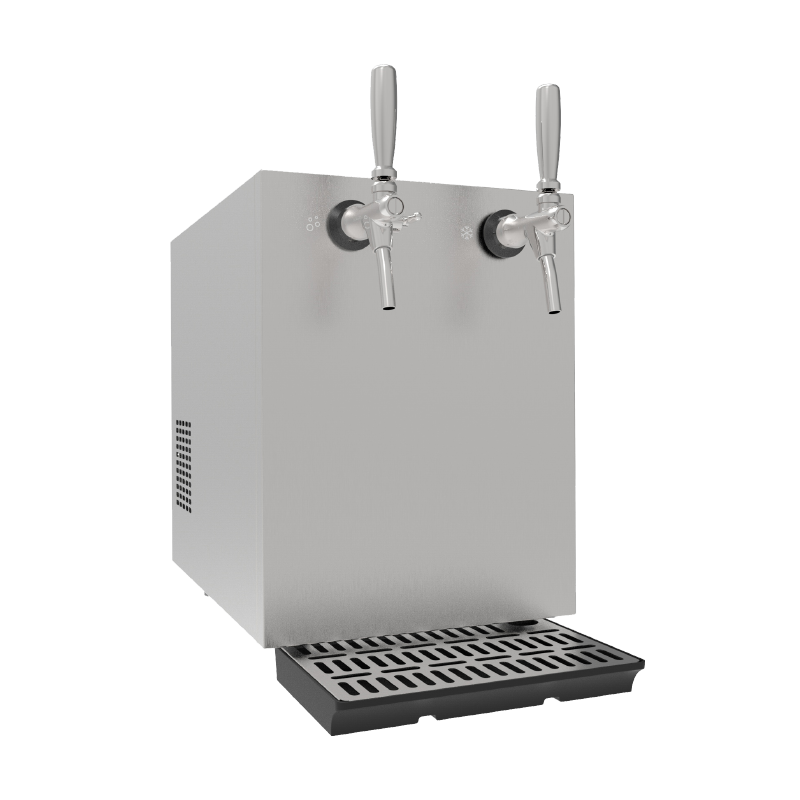
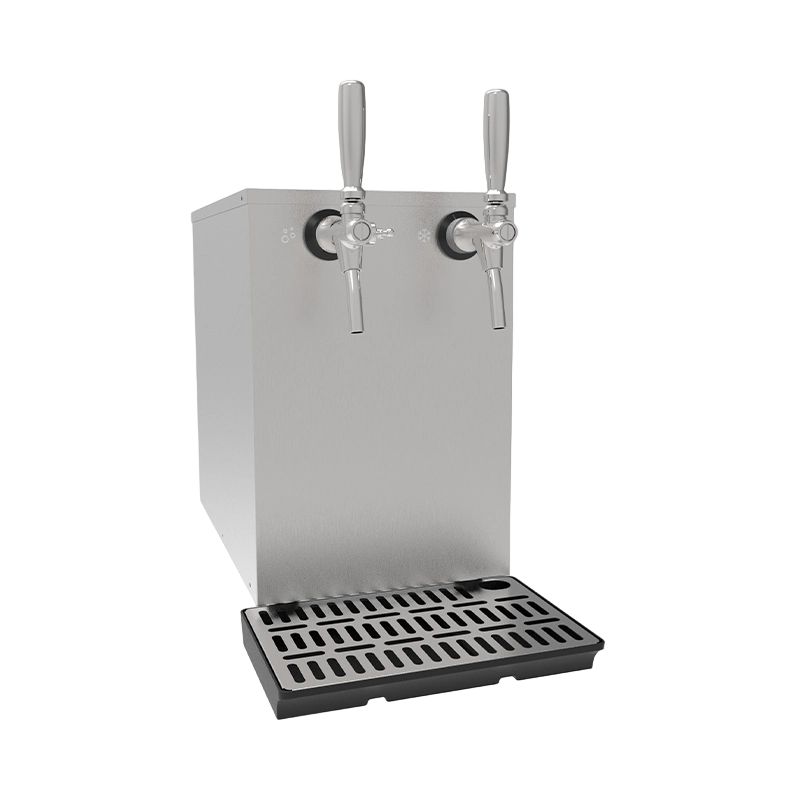
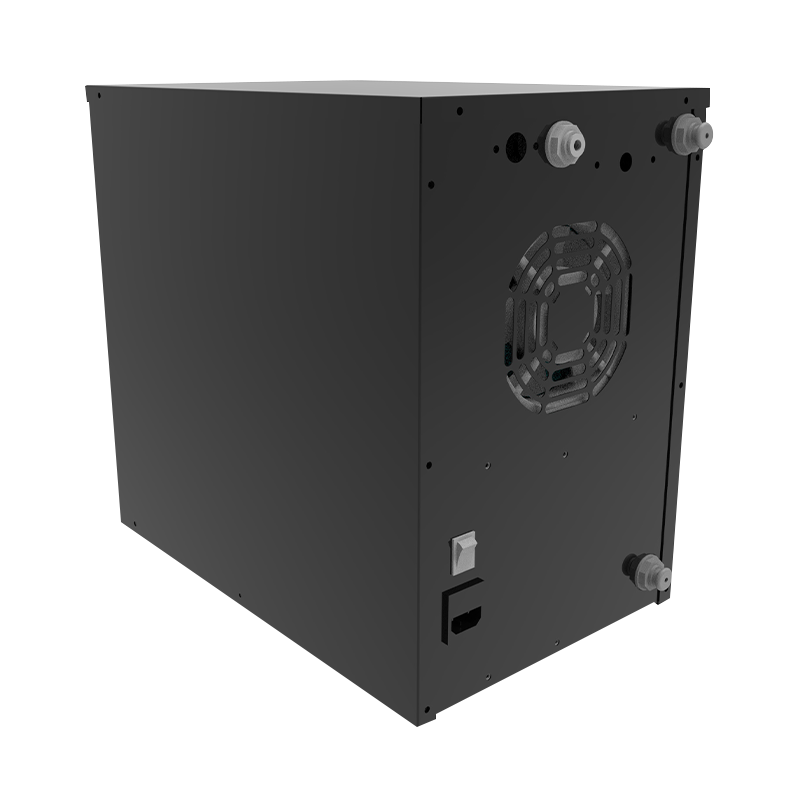
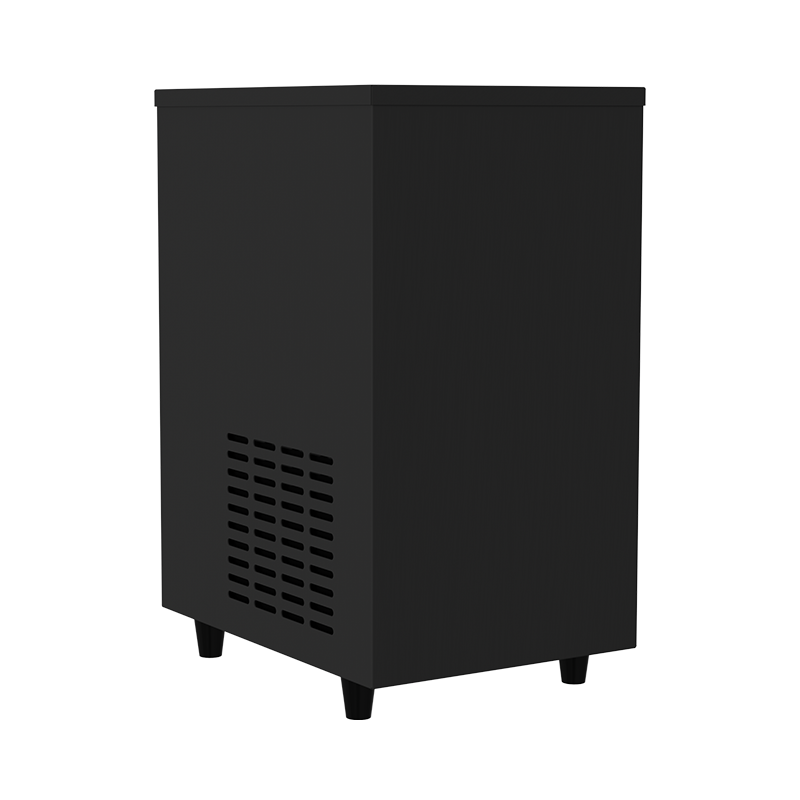
Where cabinetry work is impractical — a small café, a shared office kitchen, or a temporary venue — a self-contained countertop unit is the fastest route to both still and sparkling water. The chiller, carbonation system, and CO₂ cylinder are all housed in a single cabinet that sits on the worktop and connects to a water supply via a flexible hose. Setup typically takes under an hour. The HORECA countertop water dispenser range is designed specifically for food-service environments, with stainless steel construction and higher throughput to handle the pace of a restaurant service.
Floor-Standing Dispensers
For high-traffic venues — hotel lobbies, large open offices, canteens, exhibition halls — a HORECA floor-standing water dispenser offers the largest chilling capacity and the most visible presence. These units are freestanding, require no cabinetry, and typically dispense still, sparkling, and ambient water from separate taps at a comfortable standing height. They make an especially strong impression in hospitality settings, where a well-designed water station signals quality to guests before they have even taken a sip.
Office-Specific Models
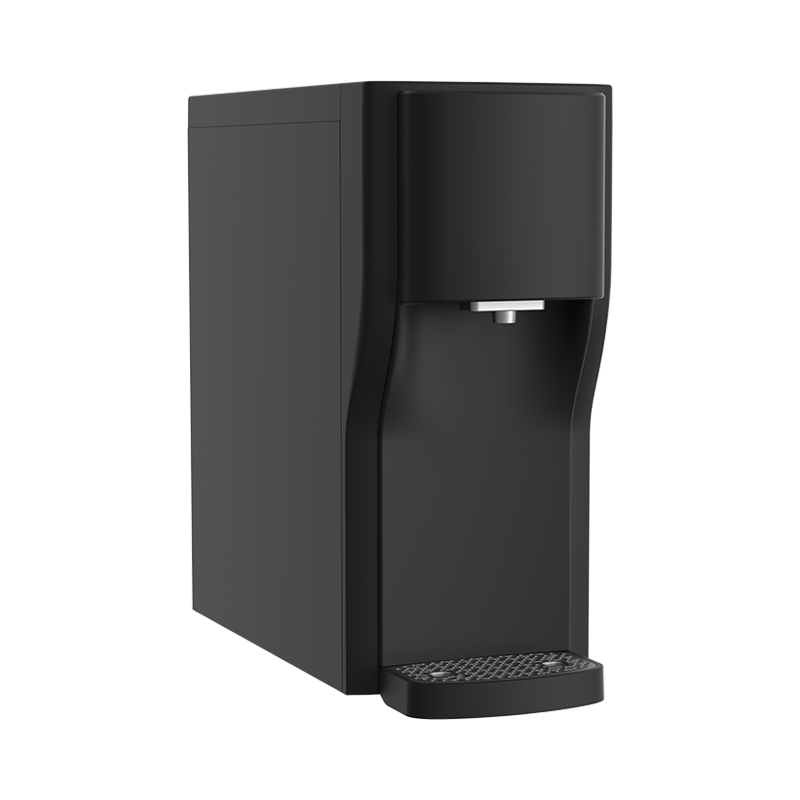
Workplace dispensers occupy their own category because they need to balance capacity, footprint, and ease of use for non-technical staff. The office water dispenser range covers countertop, undercounter, and floor-standing configurations tailored for offices of 10 to 200+ people. Key features to look for include a drip tray large enough for tall travel mugs, a child-lock or child-proof sparkling button (in mixed-use environments), and an eco mode that reduces power consumption outside office hours.
The Real Cost Comparison: Dispenser vs. Bottled Water
The economics of switching to a still and sparkling water dispenser are compelling once you look at total cost rather than upfront price alone. A medium-sized office of 30 people consuming two litres of water per person per day will spend roughly $15,000–$25,000 per year on bottled still and sparkling water when you account for purchasing, delivery, and storage. A plumbed-in dispenser system reduces that figure to a fraction of the original cost — primarily filter replacements (once or twice a year), CO₂ cylinders, and electricity.
For home use, the maths are equally clear. Bottled sparkling water at retail averages $1.00–$2.00 per litre; producing the same water through a home dispenser costs a few cents per litre once the system is amortised over its 5–10 year lifespan. Most households recoup the cost of a mid-range undercounter system within 12 to 18 months of installation.
Maintenance: What a Still and Sparkling Dispenser Actually Needs
One concern that sometimes holds buyers back is the perceived complexity of ongoing maintenance. In practice, the routine is straightforward:
- Filter replacement: Carbon and mechanical filter cartridges should be changed every 6–12 months, depending on local water quality and usage volume. Most units display a filter life indicator, so there is no need to track dates manually.
- CO₂ cylinder exchange: A standard 425 g cylinder produces around 60 litres of fully sparkling water; a 1 kg cylinder roughly 140 litres. Commercial units typically use larger cylinders (up to 10 kg) that can produce thousands of litres before needing exchange. Most suppliers offer a swap service.
- Tap and drip tray cleaning: Weekly wiping of the dispensing head and drip tray with a food-safe sanitising solution prevents biofilm build-up. Some units include a self-cleaning cycle that sanitises the cold-water path automatically.
- Annual service: A professional inspection every 12 months — checking refrigerant levels, CO₂ connections, and seal integrity — extends unit lifespan and keeps the water quality consistent.
For a complete breakdown of what to expect across different dispenser formats, the commercial sparkling water dispenser selection and maintenance guide covers everything from installation checklists to long-term service schedules.
Choosing the Right Still and Sparkling Water Dispenser
The decision comes down to three practical questions: how many people will use the machine daily, how much space is available, and what water modes are needed. A household of four with moderate sparkling water consumption will be well served by a compact undercounter unit producing 6–8 litres per hour. A restaurant turning over 100 covers per service needs a machine capable of 20+ litres per hour of chilled sparkling water, ideally with an independent still-water tap so staff can serve both simultaneously without waiting for the carbonator to recover.
It is also worth considering the trend toward smarter dispensing. Innovative trends in sparkling water dispensing include touch-screen interfaces, adjustable carbonation at the point of dispense, and remote monitoring of CO₂ and filter levels — features that reduce operational overhead in high-volume commercial settings and add a premium feel in hospitality venues.
Whatever the use case, the core value proposition of a still and sparkling water dispenser remains consistent: cleaner water, less plastic, lower long-term cost, and the freedom to choose still or sparkling on demand — without opening a bottle.


 ADDRESS
 CONTACT
 EMAIL
EMAIL