




 Language
 English
 Español
HOT PRODUCTS
Content
- 1 Why High-End Venues Are Moving Sparkling Water Service In-House
- 2 Sizing a Machine to Covers, Peak Hour, and Glassware
- 3 Countertop Machines for Bars, Coffee Stations, and Pass Areas
- 4 Undercounter Systems for Design-Led Bars and Restaurants
- 5 Floor-Standing and Wall-Mounted Units for Open Spaces
- 6 Carbonation Consistency, Chilling, and Water Quality
- 7 Hygiene, Maintenance, and Service Life
- 8 Budgeting and a Procurement Checklist
A 100-seat fine-dining room can pour well over 150 servings of sparkling water on a busy evening. Served from imported bottles, that is a recurring cost that quietly compresses beverage margins; carbonated on site, the same water costs a few cents per liter once filtration and CO2 are accounted for. That arithmetic explains why so many hotels, restaurants, and bars now run house sparkling water programs, and it also explains why equipment choice matters. For high-end venues, the right machine comes down to three things: peak covers per hour, the space available at or behind the bar, and how consistently the unit holds carbonation and chill from the first table of the night to the last. This guide works through those factors, the four installation formats, and the specifications worth confirming before you sign a purchase order.
Why High-End Venues Are Moving Sparkling Water Service In-House
The case starts with cost per glass. Producing carbonated water on site requires tap water, a food-grade CO2 supply, and periodic filter changes, which typically adds up to a few cents per liter. A bottle of imported sparkling water, by contrast, can cost several dollars at wholesale before it ever reaches the table. Venues that serve house sparkling water in custom-labeled glass bottles routinely recover the equipment investment within the first year of service, even at moderate volumes.
There is also the guest-facing side. Sparkling water is increasingly the default order at the table, and at premium venues it is judged like any other beverage: bubbles should be fine and persistent, the water properly chilled, and the pour consistent from start to finish. Behind the scenes, an on-site system removes deliveries of bottled stock, the refrigerated storage those cases occupy, and the handling of empties and deposits. For properties reporting on sustainability, it also eliminates a steady stream of single-use packaging from the daily operation.
Sizing a Machine to Covers, Peak Hour, and Glassware
Size to your busiest hour, not your daily average. A dining room that serves 400 sparkling waters across a night may push half of them through a two-hour dinner rush, and an undersized chiller will deliver warm, under-carbonated water right when the room is fullest. Start by estimating peak servings per hour, then check the machine's chilling capacity, usually rated in liters per hour, against that number. As a working example, a venue dispensing 60 chilled sparkling waters per hour at roughly 250 milliliters per pour needs around 15 liters per hour of chilled carbonated output, plus headroom for surges.
CO2 planning matters just as much. A program that runs through a standard cylinder every week will stall the moment the spare runs empty, so build cylinder rotation into your back-of-house routine and train staff on the swap. Venues filling glass bottles at a station should also decide whether bottles are filled to order or batch-prepared before service, because batch filling changes your peak load profile considerably.
| Venue setting | Peak demand pattern | Fitting format | What to prioritize |
|---|---|---|---|
| Fine-dining restaurant | Steady table service through the evening | Undercounter unit with a counter dispense tower | Chilling capacity per hour and quiet operation |
| Hotel lobby or event space | Sharp surges at check-in, breakfast, and banquets | Floor-standing multi-tap unit | Multiple simultaneous pours and easy self-service |
| Cocktail bar or coffee counter | Rapid, repeated pours at the rail | Countertop multi-tap station | Flow rate per tap and a compact footprint |
Countertop Machines for Bars, Coffee Stations, and Pass Areas
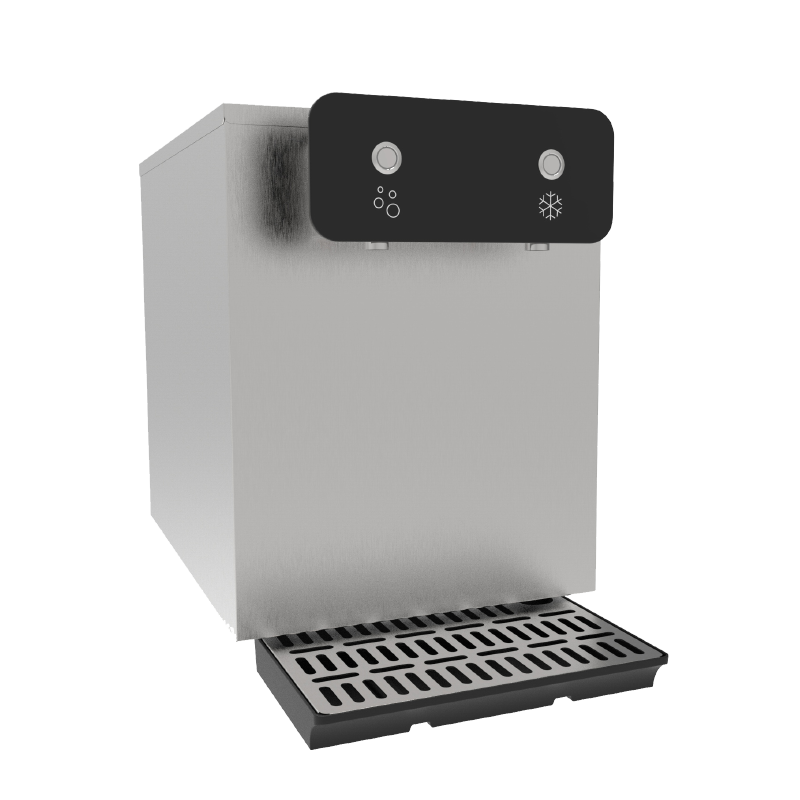
Countertop units put water service exactly where the pour happens, which makes them the first choice for cocktail bars, specialty coffee counters, and restaurant pass areas. Models in this category typically offer two or three taps or push buttons covering sparkling, chilled, and ambient water, with footprints sized for a busy rail. High-flow versions are built for continuous service, and a three-tap station can cover simultaneous pours without pressure drop across the drinks station.
When specifying, check the flow rate per tap, whether the pour volume is adjustable for bottle filling, and whether the drip tray and housing finishes match your counter. If you are weighing a counter unit against a taller floor model, the trade-offs between countertop and freestanding water dispensers for HoReCa use are worth reviewing before you commit to a footprint.
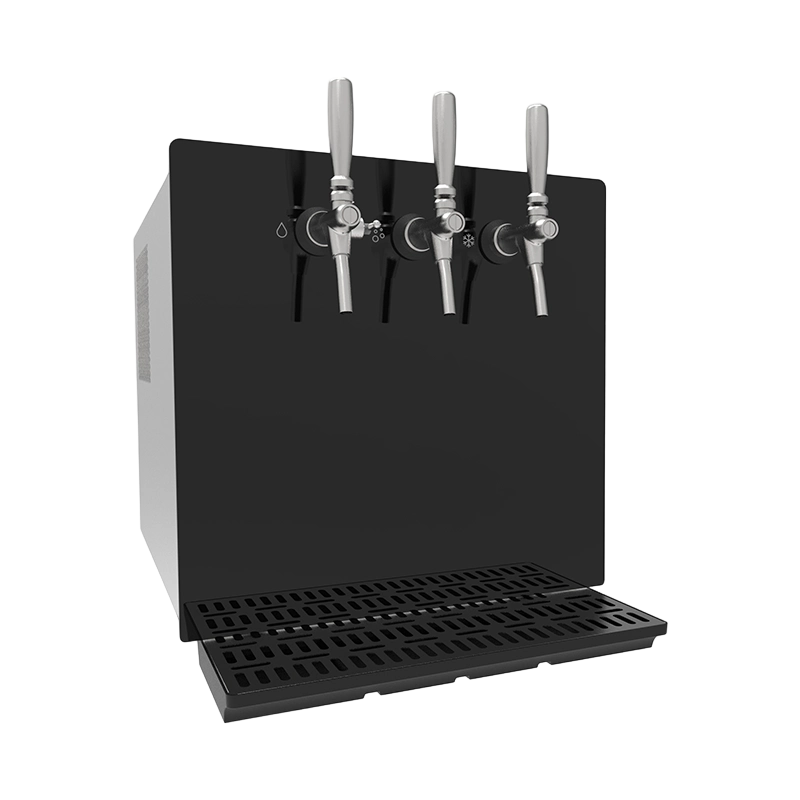 BST90C Triple-Tap High-Volume Water Station for HotelsThis three-tap station delivers sparkling, chilled, and ambient water continuously for high-traffic venues like hotel lobbies and conference centers. Its larger cooling capacity suits the peak-volume service points discussed above.View Product →
Undercounter Systems for Design-Led Bars and Restaurants
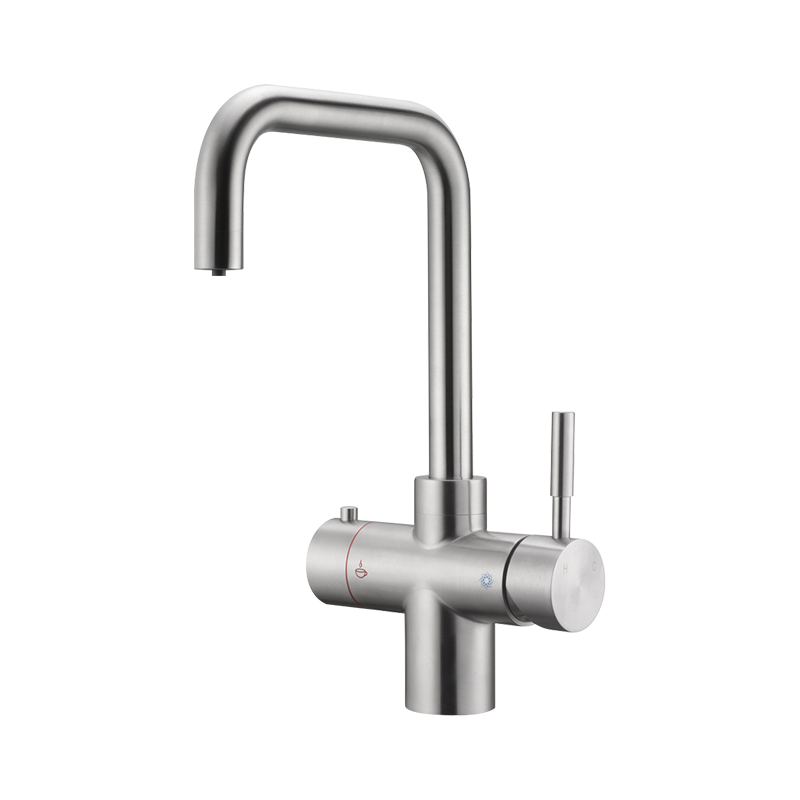
Where the bar top is too valuable to give up, an undercounter system hides the chiller and carbonator beneath the sink and surfaces only a slim dispense tower or a set of dedicated faucets. This is the default choice for design-led restaurants and hotel bars because it keeps sightlines clean while still delivering sparkling, chilled, and often ambient water on demand.
Pay attention to cooling design and mode count. Dry-cooling units avoid standing water in the cooling circuit, which simplifies hygiene and suits enclosed cabinet installations. Two-mode systems cover sparkling and chilled service, while three-mode units add ambient water for the cooking line, coffee, and tea. Capacity ratings vary widely across the category, so match the liter-per-hour figure to the peak calculation above rather than to the physical size of the cabinet, and confirm that a matching two- or three-mode dispense tower is available.
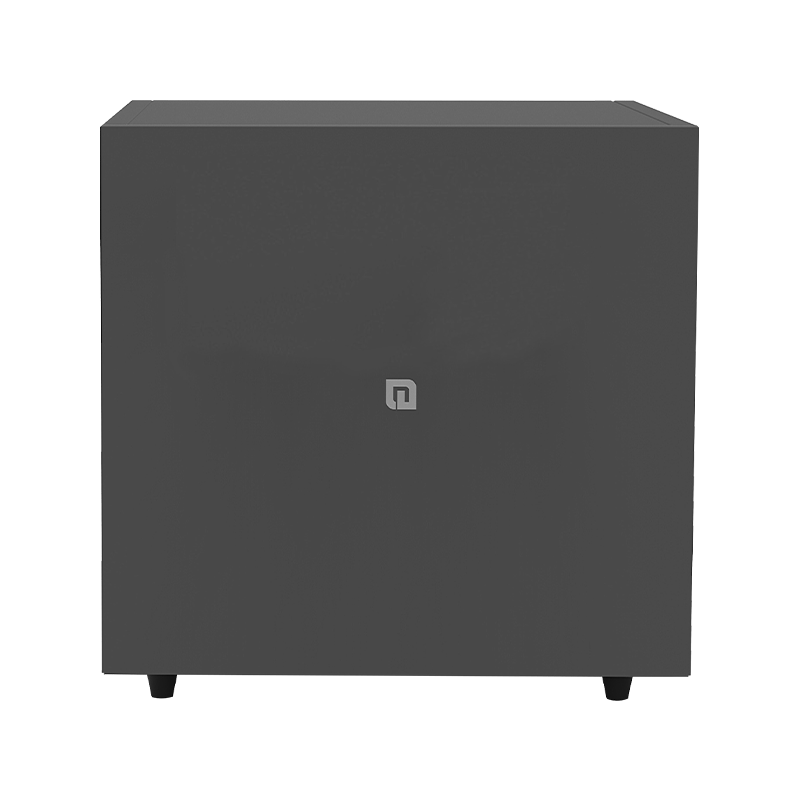 BSD90A 3-Mode Undercounter Sparkling Water DispenserThe BSD90A hides beneath the counter and dispenses sparkling, chilled, and ambient water, keeping bar tops clear. It fits design-led venues that need multi-mode service without sacrificing footprint.View Product →
Floor-Standing and Wall-Mounted Units for Open Spaces
Floor-standing units
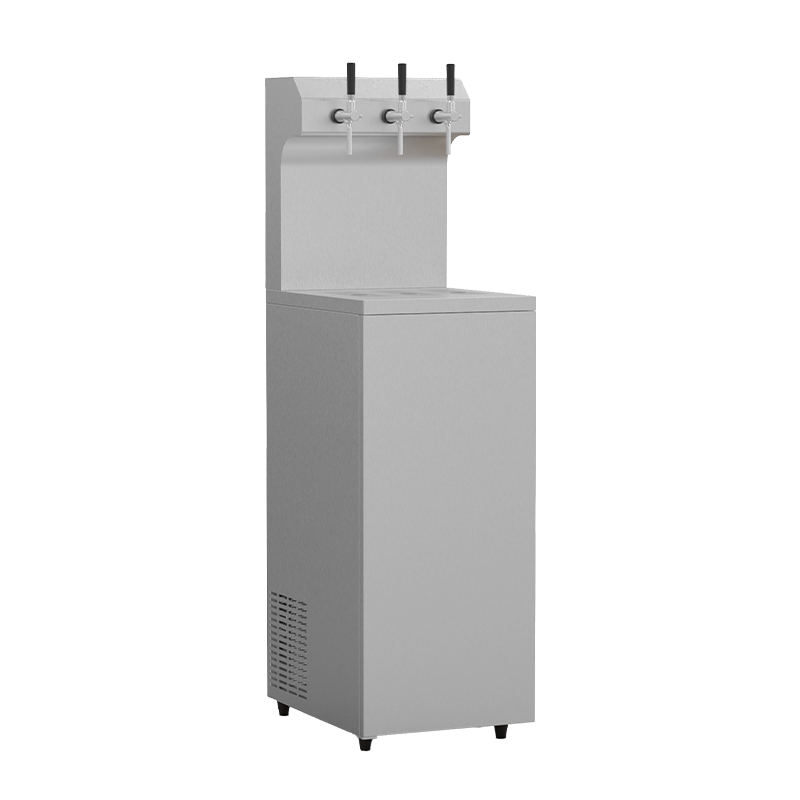
Lobbies, banquet floors, and self-service areas favor floor-standing machines. Free-standing models with two or three faucets let several guests pour at once, which suits hotel check-in periods, conference breaks, and buffet lines. Placement only requires a water connection, power, and drainage nearby, and the unit defines its own service point without any cabinetry work.
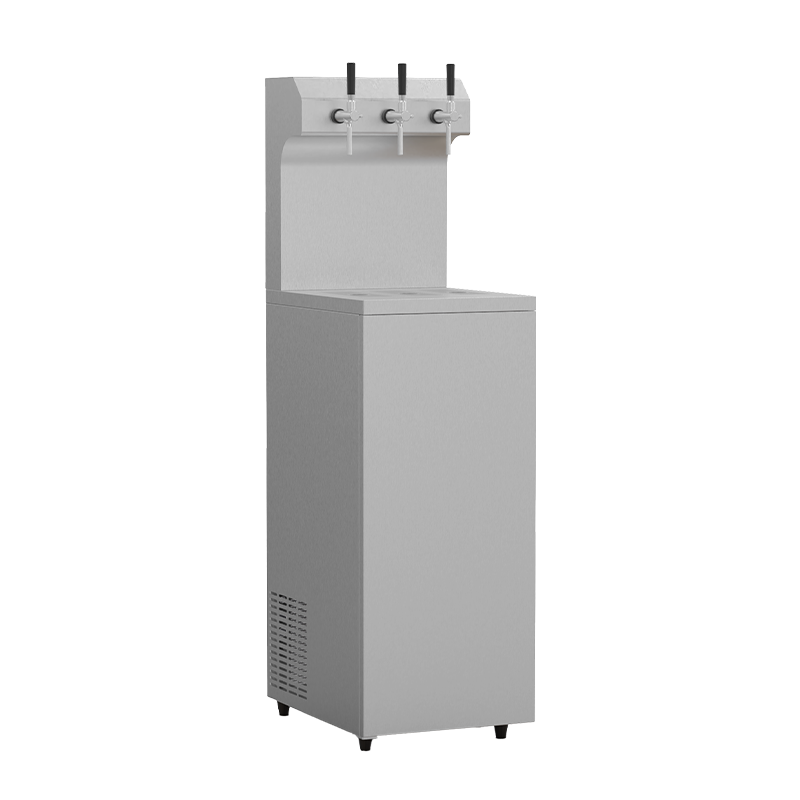 BAS120A/150A Freestanding Triple-Faucet Sparkling Water DispenserThese freestanding triple-faucet dispensers serve sparkling, chilled, and ambient water simultaneously, ideal for lobbies, banquet floors, and buffet lines. They only need water, power, and drainage nearby.View Product →
Wall-mounted units
Wall-mounted machines occupy the narrowest slice of usable space, which makes them useful in compact back bars, staff stations, and service corridors. Look for models with accessible filtration and straightforward service panels, since a wall-fixed unit should be maintainable without being taken down. In venues where every square meter of counter and floor is spoken for, this format keeps carbonated water available without competing with the bar plan.
Carbonation Consistency, Chilling, and Water Quality
Guests notice carbonation and temperature before they notice anything else about a water program. CO2 levels shape both the intensity of the fizz and the taste on the palate, so a machine with stable, well-regulated gas control will outperform a stronger compressor with erratic carbonation. Temperature works hand in hand with the gas: colder water absorbs and holds CO2 more effectively, which is why sparkling water served around 4-8°C keeps its bite in the glass far longer than water poured from an underperforming chiller.
Water quality feeding the machine is the other half of the equation. Activated carbon filtration removes chlorine and off-tastes so the carbonation reads clean, and venues in hard-water regions should plan for scale management, because scale on the carbonation and cooling components degrades performance over time. Confirm that any unit you purchase carries recognized safety certifications for both electrical and drinking-water contact, such as UL, NSF, CE, and CB. These matter not only for compliance but also for insurer requirements and brand audits.
Hygiene, Maintenance, and Service Life
Plan the maintenance routine before installation, not after the first service issue. Nozzles, taps, and dispense towers need daily rinsing and wiping as part of bar closing; water lines and the carbonator benefit from periodic sanitizing on a set schedule; and filters need replacement at the interval the manufacturer specifies, not when taste complaints start. Undercounter installations should leave enough clearance around the unit for a technician to work, and machines with accessible filter and component design cut service time noticeably.
For procurement teams, a written maintenance schedule is also a selection criterion. Ask prospective suppliers for cleaning intervals, spare-part availability, and expected component life, then compare answers across models. A structured commercial sparkling water dispenser selection and maintenance guide is a practical reference for building that checklist and holding suppliers to it.
Budgeting and a Procurement Checklist
Total cost of ownership for a venue machine covers more than the invoice: installation plumbing and electrical work, filter replacements, CO2 refills, and periodic service all recur. Budgeting those items alongside the purchase price prevents the common pattern of a well-specified machine that stalls because consumables were never planned. When you evaluate suppliers, work through a checklist like this:
- Confirm the certifications that matter in your market, including UL, NSF, CE, and CB, and ask to see the certificates themselves.
- Match the chilling capacity in liters per hour to your peak-hour serving estimate, with margin for surges.
- Clarify CO2 logistics: consumption per cylinder, cylinder size, and how swaps fit into your back-of-house routine.
- Verify the footprint, tower or tap options, and finish quality against your actual bar plan.
- Ask about warranty terms, spare-part availability, and typical lead times for service components.
- If you plan a house-branded water program, confirm whether the manufacturer supports customization and co-development.
Finally, favor manufacturers that control their own design and production. QX Soda, for example, develops and builds its HoReCa series in-house, from tooling and injection molding through finished machines, and its commercial line spans countertop, undercounter, floor-standing, and wall-mounted formats. A supplier with that depth can adjust flow rates, tap configurations, and branding to a venue's actual service pattern, which is ultimately what separates a machine that fits a high-end operation from one that merely occupies space beside the bar.


 ADDRESS
 CONTACT
 EMAIL
EMAIL