




 Language
 English
 Español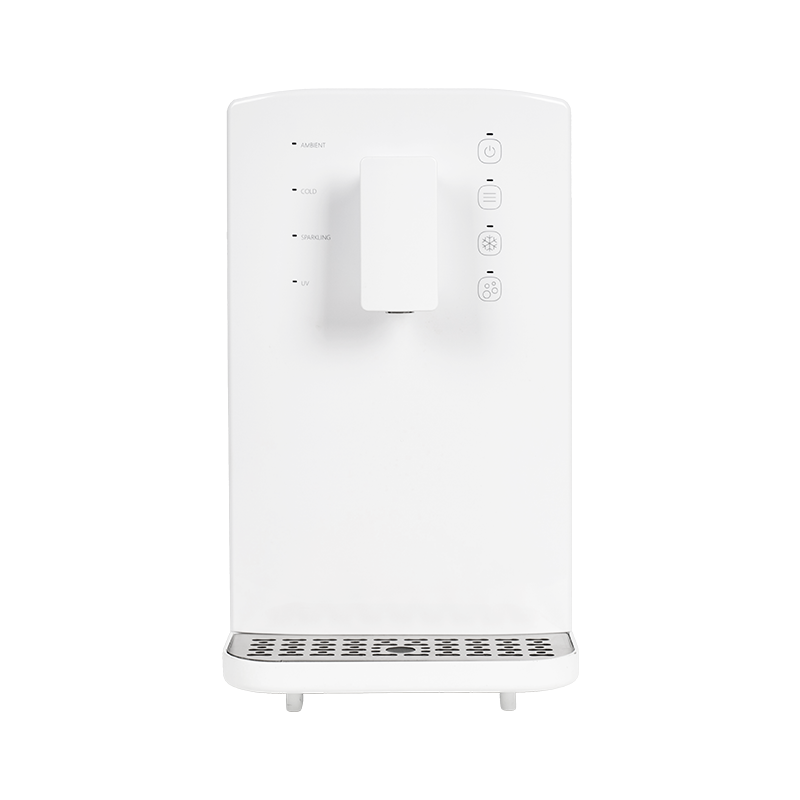
HOT PRODUCTS
Content
- 1 The Real Cost of Store-Bought Sparkling Water
- 2 Three Ways to Make Sparkling Water at Home
- 3 Method 1: Use a Home Sparkling Water Dispenser
- 4 Method 2: Use a Countertop Soda Maker
- 5 Method 3: DIY Carbonation with a Keg and CO2 Cylinder
- 6 Choosing the Right Setup for Your Kitchen
- 7 Maintenance and Safety Tips
You just finished a 12-pack of sparkling water, and the recycling bin is already full. The convenience is nice, but the cost and packaging add up quickly. You can make sparkling water at home with a few different approaches, ranging from a simple countertop soda maker to a dedicated sparkling water dispenser or a keg-based system. The best option depends on your daily consumption, available space, and how consistent you want the carbonation to be. In most cases, a home sparkling water dispenser gives the most reliable results with the least day-to-day effort, while a keg setup offers the lowest per-liter cost if you are willing to handle a larger installation.
The Real Cost of Store-Bought Sparkling Water
Before deciding on a method, it helps to understand what you are already spending. A 1-liter bottle of sparkling water typically costs between 0.70 and 1.50 USD depending on the brand and region. If your household drinks two liters per day, that is roughly 500 to 1,000 USD per year, plus the hassle of storing and recycling bottles.
When you carbonate water at home, the main recurring expenses are CO2 refills, water filter replacements, and a small amount of electricity for cooling. A typical home setup brings the cost down to roughly 0.20 to 0.40 USD per liter, depending on how often you change filters and how much CO2 you consume. That means a family drinking two liters a day can save between 300 and 600 USD per year after the initial equipment purchase.
Three Ways to Make Sparkling Water at Home
There are three practical routes: a dedicated sparkling water dispenser, a countertop soda maker, or a DIY keg carbonation rig. Each one balances upfront cost, convenience, and output differently.
| Method | Initial Cost | Cost per Liter | Space Required | Fizz Consistency |
|---|---|---|---|---|
| Home sparkling water dispenser | 300–800 USD | 0.25–0.45 USD | Countertop or undercounter | High |
| Countertop soda maker | 80–150 USD | 0.30–0.50 USD | Countertop small footprint | Medium |
| DIY keg system | 250–500 USD | 0.10–0.25 USD | Keg refrigerator or kegerator | High after setup |
The table shows that the cheapest option in the long run is a keg system, but it demands the most space and assembly. A dedicated dispenser delivers the most polished experience, especially if you value cold water, filtration, and accurate carbonation levels.
Method 1: Use a Home Sparkling Water Dispenser
A home sparkling water dispenser is the most convenient way to make sparkling water at home. The unit connects to a CO2 cylinder and, in many models, includes a built-in water filter. You press a button or touch a control panel, and the machine cools and carbonates the water instantly. You can usually choose between sparkling, cold, and ambient water, depending on the model.
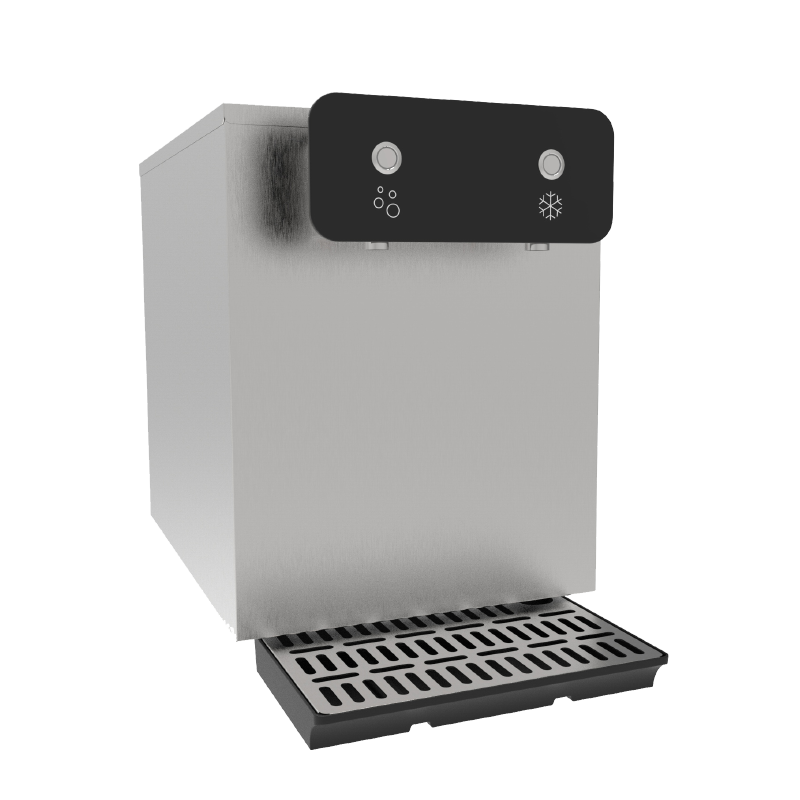
 Compact Countertop Sparkling Water Dispenser with Multiple ModesThis countertop unit offers sparkling, cold, and ambient water options in a space-saving design, making it a convenient choice for instant access without under-sink installation. Its user-friendly interface suits households wanting versatile water types.View Product →
Countertop models are a natural fit for kitchens where you want instant access without installing anything under the sink. A unit like the FST06A sits directly on the counter, combines a clean aesthetic with a user-friendly interface, and gives you three output modes so the whole household can choose the water type they prefer. It also keeps the water cold without needing a separate under-sink chilling unit, which simplifies installation.
For kitchens with limited counter space, undercounter models are the alternative. These install below the counter and dispense through a dedicated faucet, keeping the work surface clear. They are especially popular in homes where the sink area is the central water station. If you plan to increase your sparkling water consumption, an undercounter option makes that easier without taking up any usable counter space.
Method 2: Use a Countertop Soda Maker
A countertop soda maker is the simplest and least expensive way to start carbonating water at home. It does not require electricity or a filter. You fill the supplied bottle with cold water, screw it into the unit, and press the carbonation button until you reach the desired fizz level.
The process is straightforward, but it has a few limitations:
- You must chill the water in advance, because the CO2 dissolves better at lower temperatures.
- Carbonation intensity is manual, so getting the same result every time takes practice.
- The bottle capacity is usually limited to 0.5–1 liter, making it less efficient for large households.
- There is no continuous chilled water supply; you have to carbonate each bottle separately.
Even with these limitations, a countertop soda maker is a good entry point if you only drink a glass or two a day and you do not mind the extra steps. The equipment is affordable, and CO2 refills are widely available.
Method 3: DIY Carbonation with a Keg and CO2 Cylinder
The DIY keg system is the most cost-effective method for heavy sparkling water drinkers. It uses a food-grade CO2 cylinder and a stainless steel keg that you pressurize to carbonate large batches of water. Once connected to a faucet, you can dispense it on demand, sometimes through a kegerator or a dedicated refrigerator.
This approach has a strong appeal for those who want to produce several liters at a time. It also avoids single-use bottles entirely. However, it requires assembly and care:
- You need to source a well-made keg, a CO2 regulator, food-safe tubing, and a dispensing tap.
- The CO2 cylinder must be secured in an upright position and kept in a ventilated area.
- You need to monitor the pressure level to avoid over-carbonating or under-carbonating the water.
- The keg and lines must be cleaned regularly to prevent biofilm growth.
For most everyday households, the keg system is more of a project than a convenience. It makes the most sense if you already own a refrigerated dispensing setup or you are willing to learn the mechanics of pressure regulation.
Choosing the Right Setup for Your Kitchen
If you decide to go with a dedicated dispenser, the decision often comes down to four factors: installation type, CO2 capacity, water filtration, and serving temperature.
Installation Type
Countertop models require no plumbing work beyond connecting them to a CO2 cylinder and a power outlet. Undercounter models need a space below the sink and a small hole for the faucet, so they are best suited for a kitchen remodel or a dedicated water station.
CO2 Cylinder Size
A standard 425g or 1kg cylinder lasts for 60 to 120 liters of sparkling water, depending on your carbonation level. Larger commercial cylinders, such as 5kg or 20kg tanks, are more economical per liter but require more storage space. If you use sparkling water regularly, ask about the cylinder type your chosen unit accepts.
Water Filtration
Tap water chemistry varies by region. Hard water can affect both taste and the performance of your machine. Many home dispensers include a built-in carbon or multi-stage filter that reduces chlorine, sediment, and some odors. If your water is especially hard, you might consider an undercounter model that integrates a dedicated water filter.
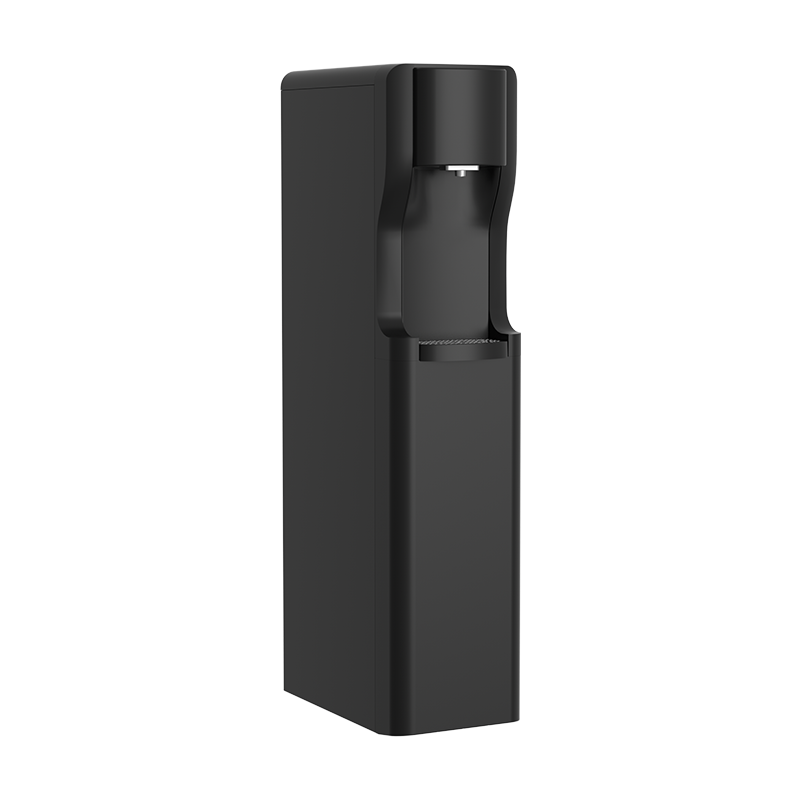
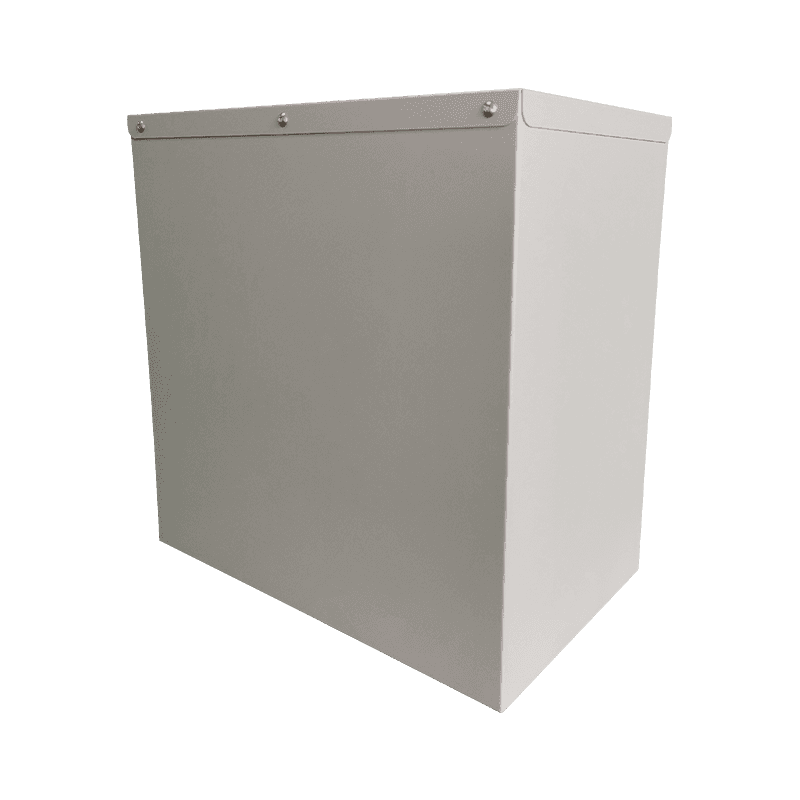 Undercounter Sparkling Water Dispenser with Integrated FiltrationThis undercounter model connects to your water line and dispenses through a stainless steel faucet, saving counter space. It supports chilled and sparkling water, and can integrate with existing filtration systems for consistent performance.View Product →
An undercounter unit like the FCD06A is a practical example of a compact system that adds sparkling water without monopolizing your counter. It connects to your existing water line, chills the water, and delivers it through a stainless steel faucet rather than a plastic pump. For households that already use a filtration system, this integration keeps performance consistent.
Serving Temperature
Cold water absorbs CO2 more effectively, so a machine that offers a chilling function will produce a crisper, more consistent carbonation than one that only uses ambient temperature water. Many home dispensers include a chiller that cools water to about 2–5°C, which is the sweet spot for a refreshing glass of sparkling water.
For a deeper look at installation details and cost breakdowns for built-in systems, refer to our built-in sparkling water dispenser buyer's guide. You can also browse the full home water dispenser collection to compare countertop and undercounter options side by side.
Maintenance and Safety Tips
Regardless of which method you choose, regular maintenance will protect both the taste of your water and the life of your equipment.
- Descale the unit every 3–6 months, depending on the hardness of your local water. Hard water causes mineral buildup that can restrict flow and reduce cooling efficiency.
- Replace water filters according to the manufacturer's schedule. A neglected filter becomes a breeding ground for bacteria and can introduce off-flavors.
- Inspect CO2 cylinders for rust or damage. Store them upright in a dry, well-ventilated area, and never expose them to high heat.
- Clean the dispensing nozzles and faucets weekly to prevent residue from accumulating around the outlet.
- If you use a keg system, flush the lines and keg with clean water after each batch to avoid residual film and odors.
Safety is especially important with CO2. While CO2 is non-flammable, a large cylinder can cause serious injury if it falls. Secure the cylinder in a stand or bracket, and always follow the manufacturer's handling instructions.
Making sparkling water at home is about balancing convenience, cost, and setup effort. A dedicated dispenser offers the best day-to-day experience for most people, while a soda maker or keg system can be worth it for specific consumption patterns. Start by estimating your weekly consumption and looking at your available kitchen space, then compare the CO2 refill costs and filter needs of the units you like. The right choice will quickly become one of the most-used appliances in your kitchen, and it will keep the fizz on tap without stacking another box of bottles by the door.


 ADDRESS
 CONTACT
 EMAIL
EMAIL