




 Language
 English
 Español
HOT PRODUCTS
Content
- 1 What a Micron Rating Actually Means
- 2 What a 1 Micron Filter Removes and What It Cannot
- 3 The Trade-Off: Finer Filtration Means More Resistance
- 4 Where 1 Micron Fits in a Multi-Stage System
- 5 Matching 1 Micron Filtration to Home, Office, and HoReCa
- 6 Service Rhythm: Keeping a 1 Micron Stage Working
- 7 Certifications and Questions Worth Asking
- 8 Key Takeaways
Most people only think about filtration when something tastes wrong. Then the questions arrive quickly: is a 1 micron cartridge worth the extra cost, will it slow the pour, and how often does it need changing? We build sparkling water dispensers for homes, offices, and hospitality venues, and those three questions come up in nearly every project conversation.
A 1 micron filter is a well-understood piece of the water path, but its value depends on what sits before and after it. This guide covers what the rating really means, what it removes, and where it belongs inside a sparkling water system.
What a Micron Rating Actually Means
A micron is one millionth of a metre, or one thousandth of a millimetre. For scale, a human hair measures about 70 microns across, fine silt runs from roughly 2 to 50 microns, and a red blood cell is around 8 microns. When a cartridge carries a 1 micron rating, it is designed to hold back particles at or above that size, roughly one seventieth the width of a hair.
Nominal and Absolute Ratings Are Not the Same Promise
A nominal 1 micron rating usually means the cartridge captures a high share of particles at that size, often quoted between 85 and 95 percent, while allowing a small fraction through. An absolute 1 micron rating means the filter has been tested to block essentially every particle of that size, generally at 99.9 percent efficiency or better.
Both have a place in drinking water. Absolute ratings give a predictable performance floor and are easier to specify for commercial sites. Nominal ratings usually deliver better flow at a lower cost, which matters when one dispenser has to serve a busy bar.
| Cartridge rating | Typical particles held back | Practical note |
|---|---|---|
| 5 micron | Sand, coarse silt, rust flakes, pipe debris | Commonly used as a first-stage pre-filter |
| 1 micron | Fine silt, most bacteria, protozoan cysts, some microplastics | A practical sweet spot for drinking water |
| 0.5 micron | Very fine sediment, finer bacteria, larger colloidal material | Tighter than most drinking water needs alone |
| 0.01 to 0.1 micron | Bacteria, cysts, and many viruses in the ultrafiltration range | Needs pre-filtration and stable pressure |
What a 1 Micron Filter Removes and What It Cannot
At one micron, a cartridge works at the boundary between mechanical straining and true membrane separation. It handles a broad set of contaminants well:
- Fine sediment and silt that clouds water after heavy rain or mains repairs
- Rust and scale particles released by older pipework
- Many common bacteria, most of which measure between 0.5 and 5 microns
- Protozoan cysts such as Cryptosporidium at 4 to 6 microns and Giardia at 8 to 12 microns
- A meaningful share of microplastics, which typically fall in the 1 to 100 micron range
The limits matter just as much. Viruses measure roughly 0.02 to 0.3 microns, so they pass through a 1 micron cartridge. Dissolved minerals such as calcium and magnesium are far too small for any mechanical filter, which is why a 1 micron stage will not soften water or reduce total dissolved solids. Chlorine and taste compounds are removed by adsorption rather than pore size, so the media inside the cartridge counts as much as the number printed on the label.
Why the 1 Micron Carbon Block Is the Common Choice
A carbon block pressed to a 1 micron nominal rating does both jobs in one housing: the pore structure strains fine particles while the carbon surface adsorbs chlorine and organic compounds. That combination is why the format appears so often in countertop and undercounter drinking water systems.
The Trade-Off: Finer Filtration Means More Resistance
Every step down in micron size increases resistance to flow. Pores that stop finer particles also fill faster, so a 1 micron cartridge usually reaches the end of its life sooner than a 5 micron one in the same water. Three habits keep the trade-off manageable:
- Pre-filter with a 5 micron sediment stage so the finer cartridge is not doing the heavy lifting
- Choose a cartridge with more surface area rather than a small wound string
- Size the filter to peak demand, not average demand, because the slowest pour always happens when several taps are open at once
Inside a sparkling water dispenser, the filter sits upstream of the cooling and carbonation circuits, so a restriction shows up at the tap as a slower pour. In a venue serving sparkling water by the glass, that is a guest experience issue, not just a plumbing detail.
Where 1 Micron Fits in a Multi-Stage System
One cartridge rarely solves every water problem. The sensible arrangement follows a simple order: coarse first, fine second, membrane last.
- A 5 micron sediment cartridge takes out sand, rust, and coarse debris, protecting everything downstream
- A 1 micron carbon block removes fine particles and adsorbs chlorine, improving taste before water reaches the machine
- An ultrafiltration membrane rated between 0.01 and 0.1 microns adds a barrier against bacteria and some viruses, though it demands clean feed water to survive
Not every site needs the third stage. For most homes and offices, a well-maintained two-stage setup with a 1 micron carbon block delivers clean-tasting water and protects the carbonation components. Commercial kitchens and bars with heavy daily output gain the most from the extra barrier.
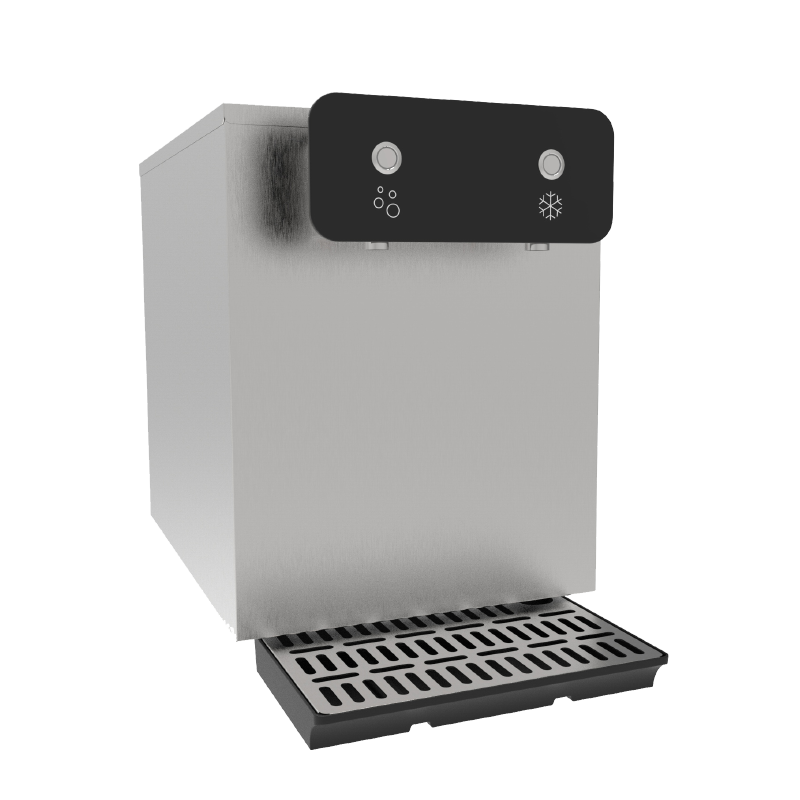
Our home countertop model FYT02A shows how this works in a compact machine: the filter stage keeps fine particles out of the carbonation circuit while the unit still fits comfortably on a kitchen worktop.
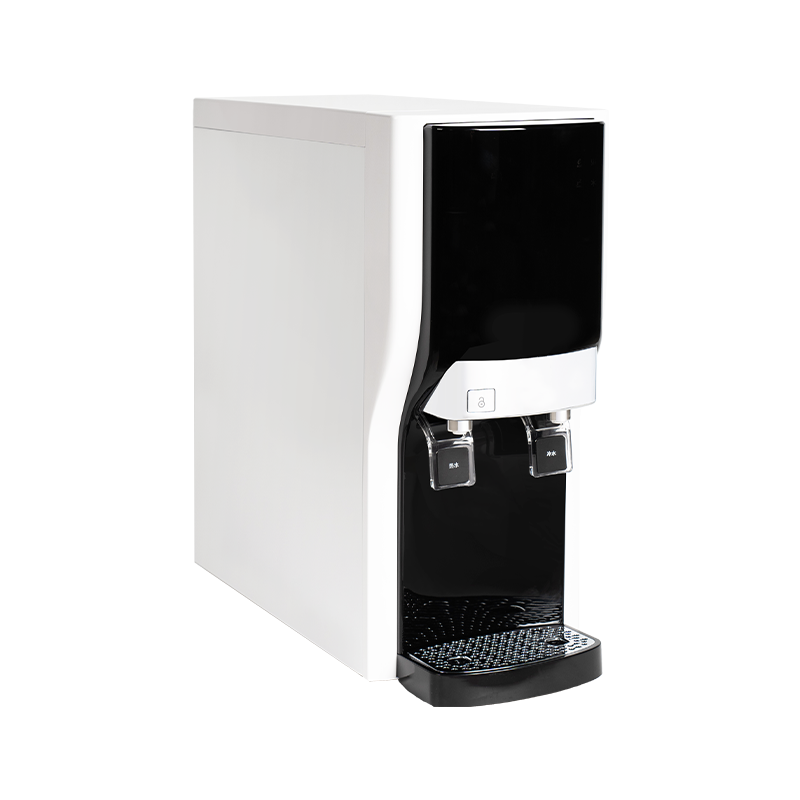 Countertop Sparkling Water Dispenser For Home With FilterThe Countertop Sparkling Water Dispenser for Home with Filter is designed to elevate your hydration experience with unparalleled convenience and quality. This innovati...View Product →
Matching 1 Micron Filtration to Home, Office, and HoReCa
Homes
In a home kitchen, a 1 micron carbon block behind a 5 micron pre-filter is usually the sweet spot. Cartridge changes are infrequent, flow stays comfortable for filling a bottle or a carafe, and the water reaching the sparkling circuit is clean enough to protect the pump and carbonator.
Offices
Office pantries push far more litres through the same hardware. Demand peaks in the minutes before and after meetings, so pre-filtration and generous surface area matter more than an unusually tight rating. A water report from the building supply is the best guide to what the site actually needs.
Hotels, Restaurants, and Cafes
Hospitality sites combine high volume with almost no tolerance for downtime. A 5 micron pre-filter plus a 1 micron carbon block covers most municipal supplies, and a membrane stage is worth considering where water quality varies through the year. Our guide to filtration options for the BST series looks at how those choices change as output climbs.
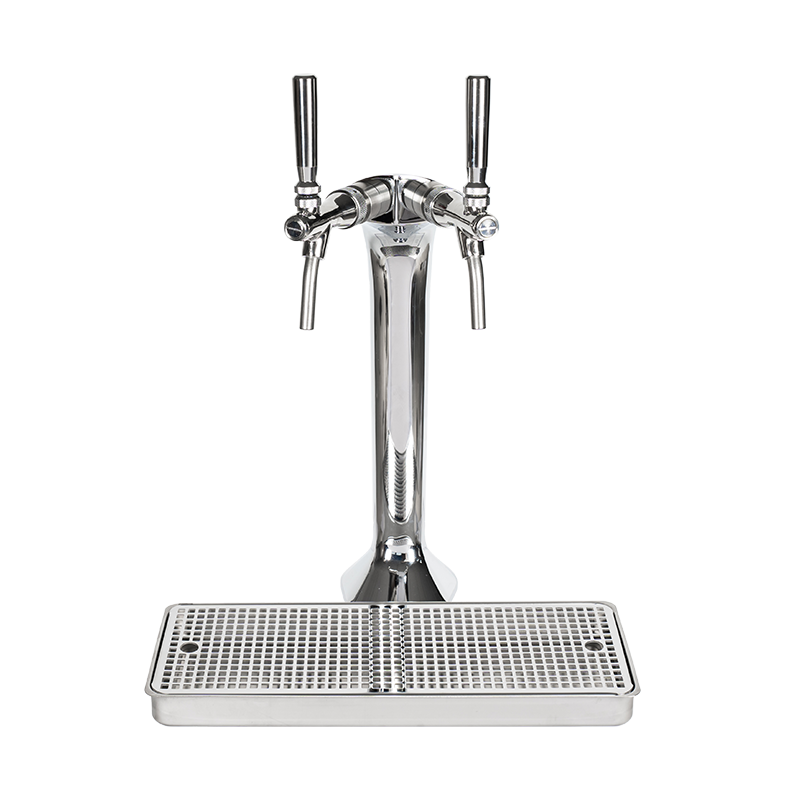
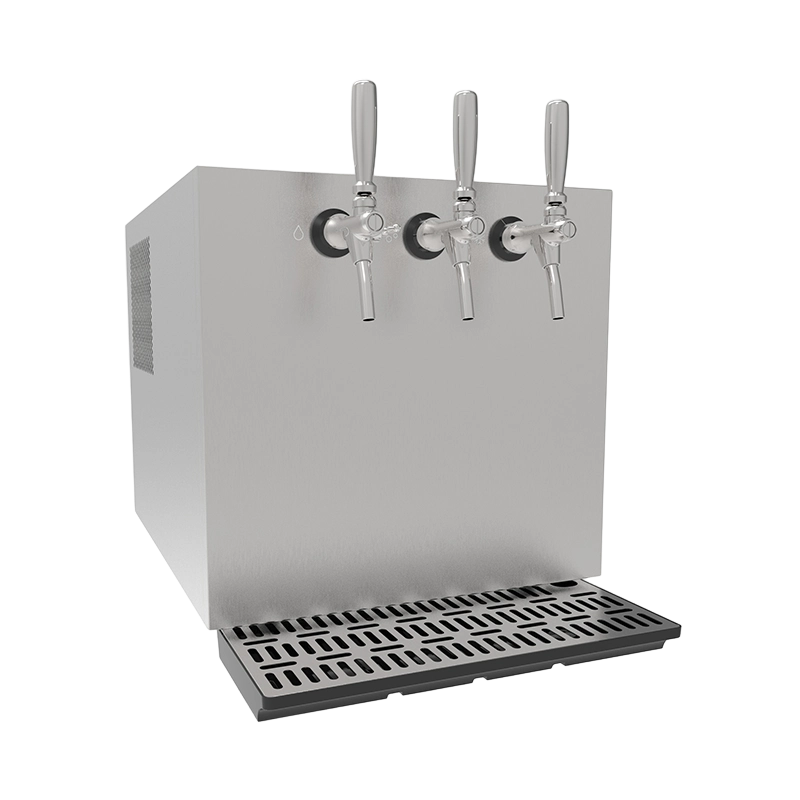
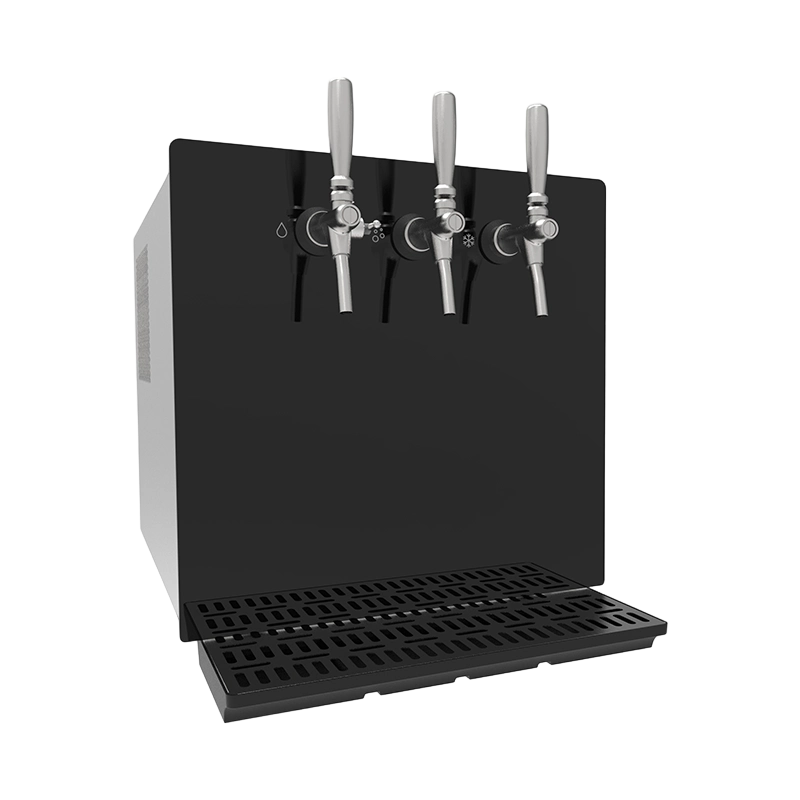
Where space under the counter is tight, the BSD30A three-mode undercounter dispenser keeps filtration, cooling, and carbonation hardware out of sight while serving sparkling, chilled, and ambient water from a single tower.
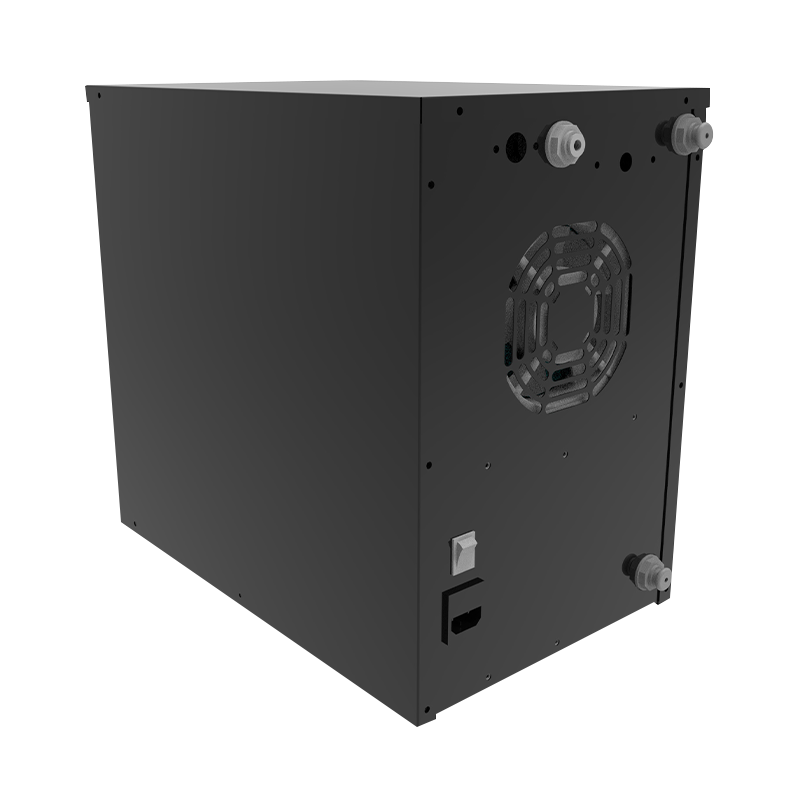 BSD30A 3-Mode Undercounter Multi-Temperature Water DispenserThe BSD30A 3-Mode Undercounter Sparkling Water Dispenser, the perfect hydration solution tailored for commercial environments. Engineered with versatility in mind, thi...View Product →
When only a wall is available, the BDW20A wall-mounted dispenser was designed with filtration access in mind, so cartridges can be reached and replaced without dismantling the machine.
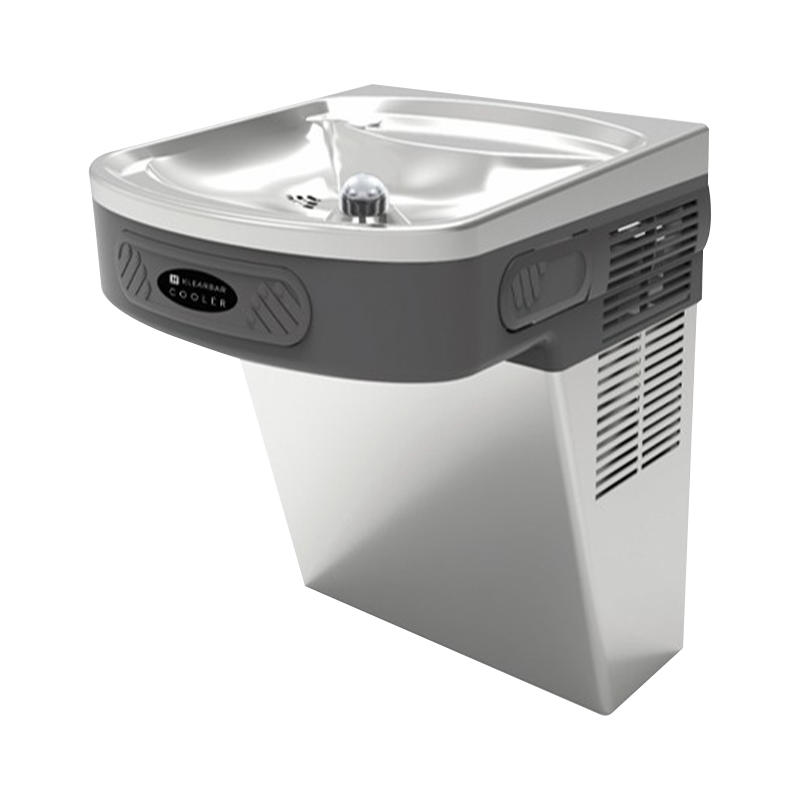 BDW20A Wall Mounting Sparkling Water Dispenser with Filtration Accessible DesignThe BDW20A wall-mount sparkling water dispenser is designed to provide a convenient, hygienic, and environmentally conscious solution for both public and private space...View Product →
Service Rhythm: Keeping a 1 Micron Stage Working
A 1 micron cartridge rarely fails dramatically; it fades. Flow slows, taste drifts, and pressure drop rises until someone notices the pour. A simple schedule avoids surprises.
| Filtration stage | Typical interval | Warning signs |
|---|---|---|
| 5 micron sediment pre-filter | 3 to 6 months | Visible discolouration, falling flow |
| 1 micron carbon block | 6 to 12 months, or 3,000 to 6,000 litres | Chlorine taste returning, cloudy water |
| Ultrafiltration membrane | 12 to 24 months | Steady flow loss that does not recover |
Treat the intervals as a starting point rather than a rule, because incoming water quality decides how quickly each stage loads up. Log every cartridge change and check flow monthly; the pattern will tell you more about your water than any general recommendation.
Certifications and Questions Worth Asking
Certification is how a filtration claim becomes verifiable. For drinking water systems sold internationally, expect NSF/ANSI 42 for aesthetic effects and NSF/ANSI 53 for health-related contaminants, alongside UL or CB for electrical safety and CE marking for Europe. Our machines are certified to UL, NSF, CE, and CB standards, and the cartridge specifications we work with follow the same discipline.
- Is the rated micron size nominal or absolute?
- Which standard was the cartridge tested against, and by whom?
- What flow rate and pressure drop does it show at end of life?
- What pre-filtration does the manufacturer recommend?
- Will replacement cartridges stay available in the same format over the life of the machine?
Key Takeaways
A 1 micron filter earns its place because it catches fine sediment, most bacteria, and protozoan cysts without the complexity of a membrane process. It is not a cure-all: it will not soften water, remove dissolved solids, or stop viruses, and it costs a little flow compared with coarser cartridges.
Place it second in a three-stage chain, protect it with a pre-filter, and replace it on schedule, and it will quietly do its job for years. If you are weighing a new machine rather than a cartridge change, our sparkling water dispenser range shows how filtration is integrated across home, office, and commercial models.

 ADDRESS
 CONTACT
 EMAIL
EMAIL