




 Language
 English
 Español
HOT PRODUCTS
Content
- 1 The Short Answer: RO Rejects Microplastics Almost Completely
- 2 Where Microplastics in Drinking Water Actually Come From
- 3 How an RO Membrane Captures Plastic Particles
- 4 What RO Does Not Do: Honest Limits Worth Knowing
- 5 Matching Filtration to a Sparkling Water Dispenser
- 6 Maintenance Habits That Keep Removal Rates High
- 7 Quick Answers to Common Follow-Up Questions
- 8 The Bottom Line
If you have swapped bottled water for a filtered dispenser, or you are specifying a sparkling water machine for a cafe or an office pantry, the question is a fair one: does reverse osmosis remove microplastics? The short answer is yes. Reverse osmosis is one of the most effective filtration technologies available for keeping tiny plastic particles out of your glass. The longer answer is more interesting, because how much gets through, which particle sizes actually matter, and what the rest of the system does all shape the final result. In this guide we walk through the science in plain language, share what we see on the factory floor, and explain how to choose a setup that genuinely delivers clean, great-tasting water.
The Short Answer: RO Rejects Microplastics Almost Completely
Reverse osmosis pushes water through a semi-permeable membrane whose pores measure roughly 0.0001 microns across, or about 0.1 nanometres. Microplastics, by definition, are plastic fragments and fibres between 1 micron and 5 millimetres in size. Even the smallest particle in that range is thousands of times wider than the pores of a typical RO membrane, so it simply cannot squeeze through. Instead, particles are swept away in the concentrate stream that carries dissolved solids out of the system. Published research and independent testing consistently report microplastic rejection rates above 99% for a healthy, well-maintained RO membrane.
That does not mean every filter on the market behaves the same way. The comparison below shows where RO sits next to the other stages commonly found in drinking water systems.
| Filtration stage | Typical pore size | Microplastic removal |
|---|---|---|
| Reverse osmosis (RO) | About 0.0001 micron | Above 99% |
| Ultrafiltration (UF) | 0.01 to 0.1 micron | High for larger fragments |
| Carbon block | 0.5 to 10 microns | Partial |
| Sediment pre-filter | 5 to 20 microns | Large debris only |
| Distillation | Not a pore-rated barrier | High, but energy intensive |
Where Microplastics in Drinking Water Actually Come From
Microplastics enter water at several points along the way. Source water, including rivers, lakes and groundwater recharged by treated wastewater, already carries fibres and fragments from synthetic clothing, tyres, packaging and industrial processes. Distribution pipes, storage tanks and older plumbing can add more. Then there is the packaging itself: surveys of bottled water have found plastic particles in a meaningful share of samples, and the bottle is often the last thing the water touches before it reaches your lips.
Size is the detail that matters most for filtration. Anything from 1 micron to 5 millimetres is classified as a microplastic. Particles smaller than 1 micron are usually called nanoplastics, and they behave differently: they stay suspended for long periods and are small enough to pass through barriers that stop larger fragments. Any honest conversation about RO and plastic particles has to include them.
How an RO Membrane Captures Plastic Particles
Inside an RO module, feed water travels across the surface of a spiral-wound membrane rather than straight into it. Clean permeate passes through the dense polyamide layer, while the cross-flow of feed water continuously washes rejected material toward the drain. Size exclusion does most of the work, but adsorption and electrostatic effects help too: many plastic particles, along with the additives that travel with them, carry a surface charge or simply stick to the membrane material instead of passing through.
In practice, the membrane never works alone. A typical system runs water through a sediment pre-filter, then a carbon block, then the RO membrane, then a post-carbon polishing stage. The pre-filter protects the membrane from grit and larger debris, while the carbon stage removes the chlorine that would otherwise degrade the polyamide layer. If you want a deeper side-by-side of how RO, ultrafiltration and carbon stages compare on microplastics, we keep a fuller technical breakdown in our library.
What RO Does Not Do: Honest Limits Worth Knowing
RO is excellent, but it is not magic. A few practical caveats are worth keeping in mind:
- Nanoplastics below roughly 100 nanometres can occasionally pass through, which is why pre-filtration and tight system design matter.
- Everything downstream of the membrane, including tubing, tanks, seals, O-rings and taps, is a potential point of plastic contact. Material choice counts.
- Chlorine and excessive pressure shorten membrane life, and a degraded membrane loses rejection performance quietly long before it stops producing water.
- RO removes minerals along with contaminants, which is why remineralisation or a blended post-filter is common in premium dispensers.
- Boiling does not remove microplastics. It concentrates them as water evaporates, so it is not a substitute for filtration.
Matching Filtration to a Sparkling Water Dispenser
Filtration rarely gets discussed when people shop for sparkling water machines, and that is a mistake. Carbonation is the last step in the chain, so whatever the filtration stages leave behind ends up in the glass, and it arrives with bubbles that make off-notes more noticeable. From our side of the industry, we design our sparkling water dispensers around multi-stage filtration so the RO stage sits upstream of the carbonation tank rather than being bolted on as an afterthought. Every unit leaves our line with UL, NSF, CE and CB certification behind it, because filtration claims only mean something when the hardware is built to hold up.
For households that want the equipment out of sight, an undercounter unit paired with a dedicated tap keeps the counter clear and gives the filtration stack room to breathe.
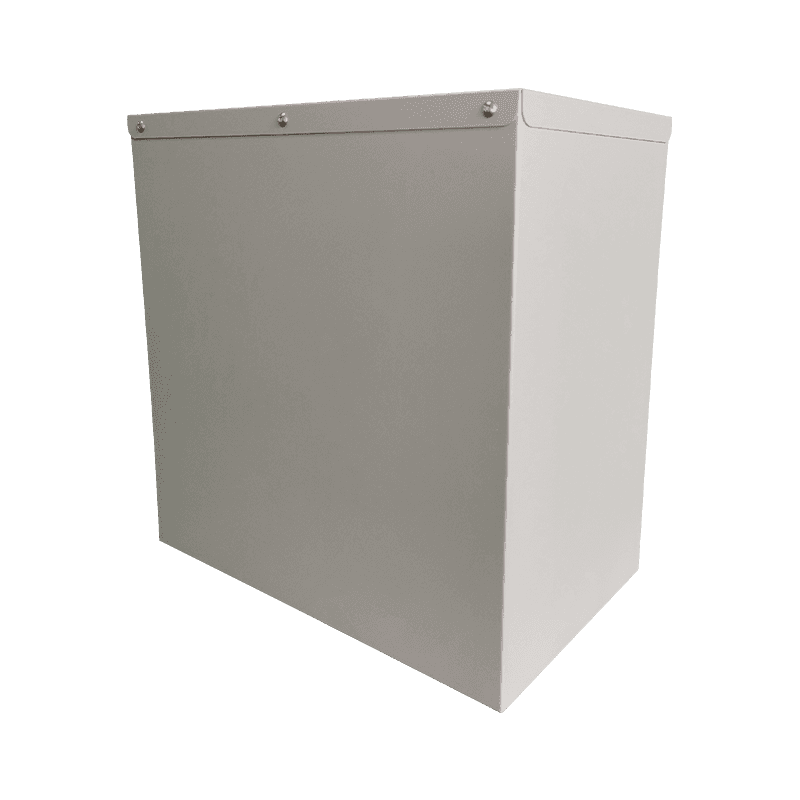 Multifunctional Household Undercounter Sparkling Water DispenserThe Multifunctional Household Undercounter Sparkling Water Dispenser offers a diverse range of drinking water choices, making it a versatile addition to any home or of...View Product →
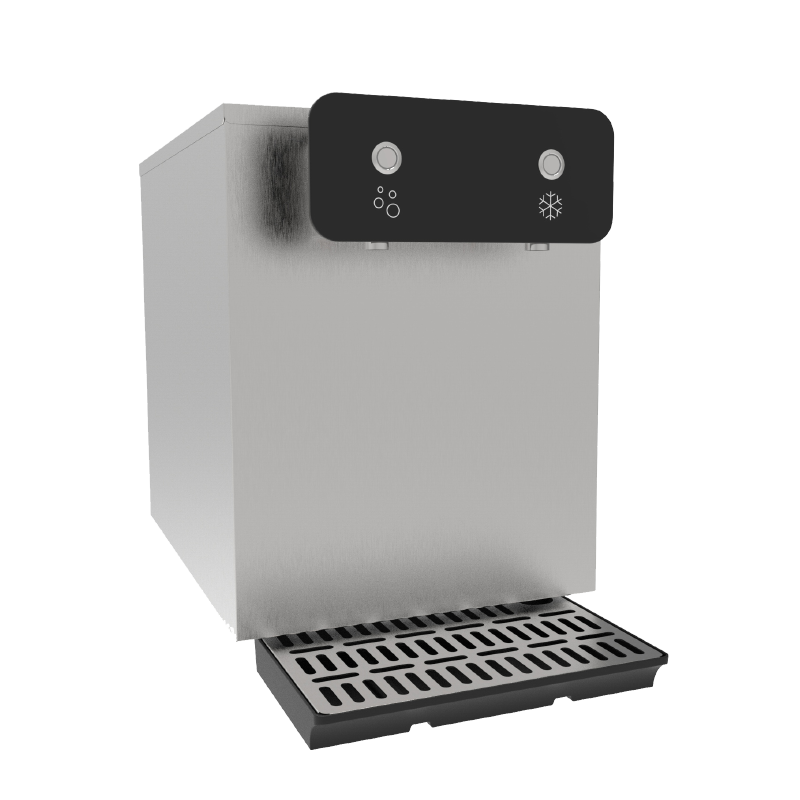
Countertop models suit rented kitchens and smaller spaces, and some ship with an integrated filter so the filtration stage and the carbonator live inside one compact housing.
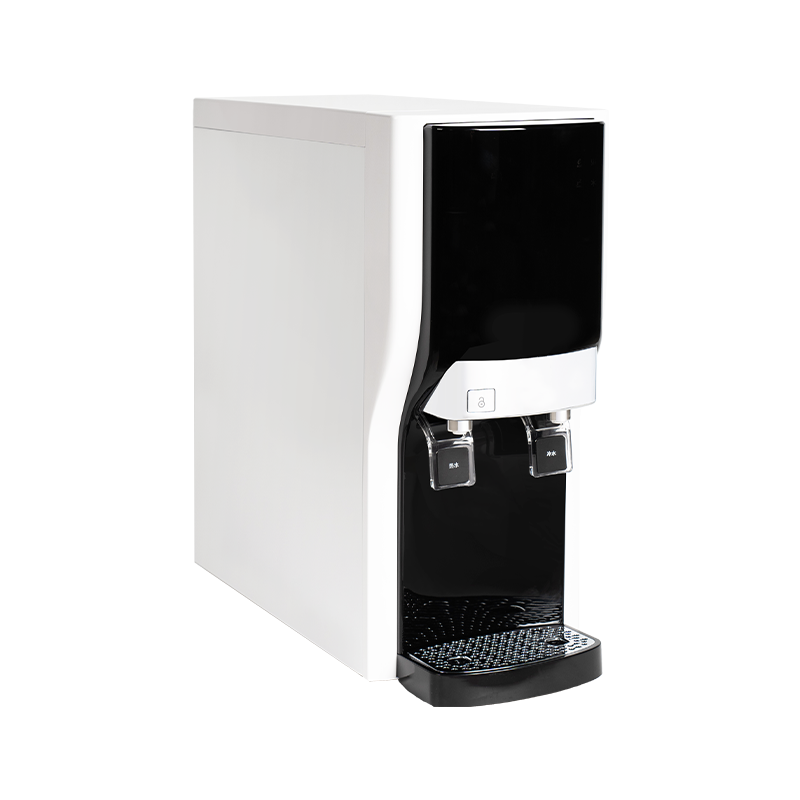 Countertop Sparkling Water Dispenser For Home With FilterThe Countertop Sparkling Water Dispenser for Home with Filter is designed to elevate your hydration experience with unparalleled convenience and quality. This innovati...View Product →
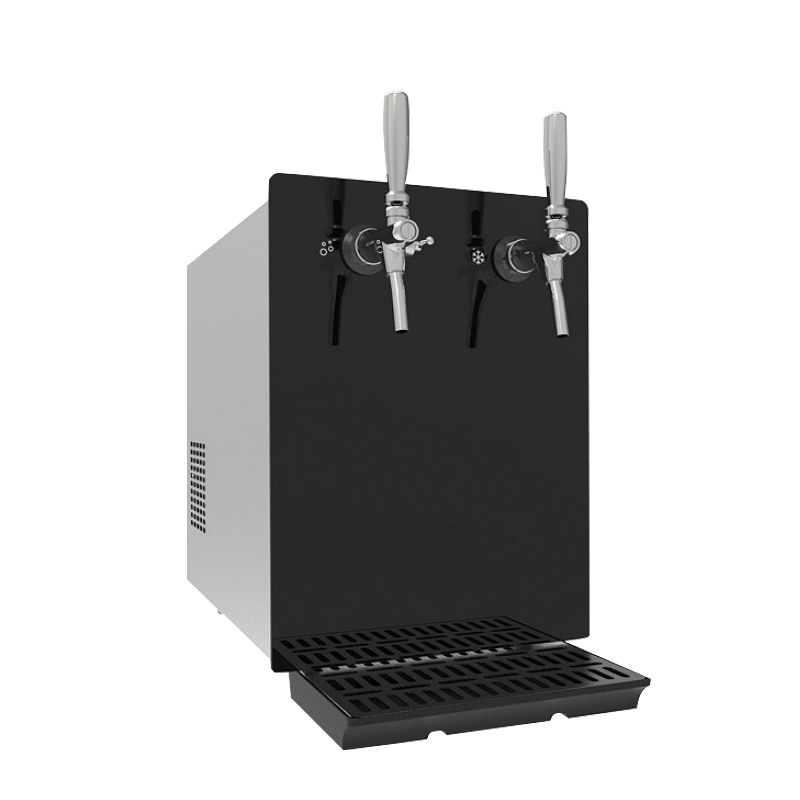
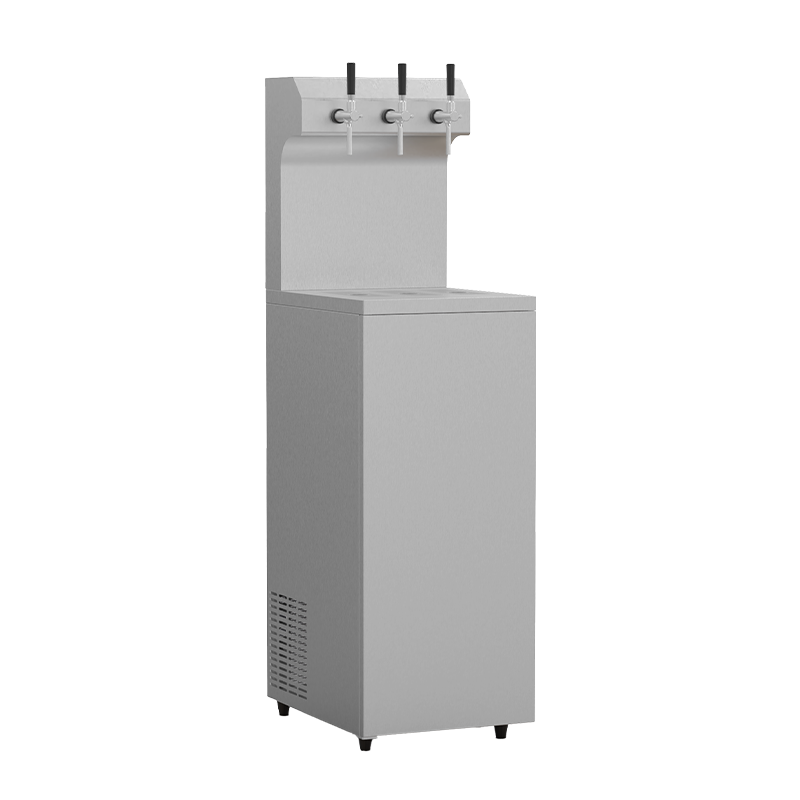
Coffee bars, restaurants and hotels need higher flow and continuous service, which is why commercial undercounter units are usually paired with two-mode or three-mode dispense towers and sized around peak-hour demand.
 BSD150A 3-Mode Undercounter Sparkling Water Dispenser with Cold and Ambient ModesThe BSD150A Undercounter Sparkling, Cold Ambient Water Dispenser is a high-performance hydration solution engineered specifically for commercial environments. Designed...View Product →
Maintenance Habits That Keep Removal Rates High
Even the best membrane is only as good as its maintenance schedule. A simple routine protects performance year after year:
- Replace sediment and carbon pre-filters every 6 to 12 months, or sooner in hard-water areas.
- Swap the RO membrane every 24 to 36 months, and immediately if output slows or taste changes.
- Sanitise tanks, lines and taps on a fixed schedule to prevent biofilm build-up.
- Flush the system after any period of inactivity longer than a few days.
- Inspect downstream tubing and seals for wear during every service visit.
Quick Answers to Common Follow-Up Questions
Does a carbon filter jug remove microplastics?
Partially. Gravity jugs capture larger fragments and fibres, but their nominal pore ratings are far coarser than an RO membrane, and nanoplastics can slip through. They are a step up from untreated tap water, not a replacement for reverse osmosis.
Is bottled water a safer choice?
Not necessarily. Bottled water can pick up microplastics from the source, the bottling line and the bottle itself. A well-maintained dispenser with RO filtration gives you far more control over what is in your glass.
Do I still need RO if my tap water is already treated?
Municipal treatment targets pathogens and regulated contaminants, not plastic particles. If microplastics are your concern, the RO stage is the one that addresses them directly.
The Bottom Line
So, does reverse osmosis remove microplastics? Yes, reliably, and at rates above 99% when the membrane is healthy and the system around it is properly engineered. What separates a good setup from a mediocre one is everything else: pre-filtration that protects the membrane, downstream materials that do not reintroduce plastic contact, and a maintenance rhythm that keeps rejection rates where they belong. Get those three right, and the water in your glass, still or sparkling, does exactly what you bought it to do.

 ADDRESS
 CONTACT
 EMAIL
EMAIL