




 Language
 English
 Español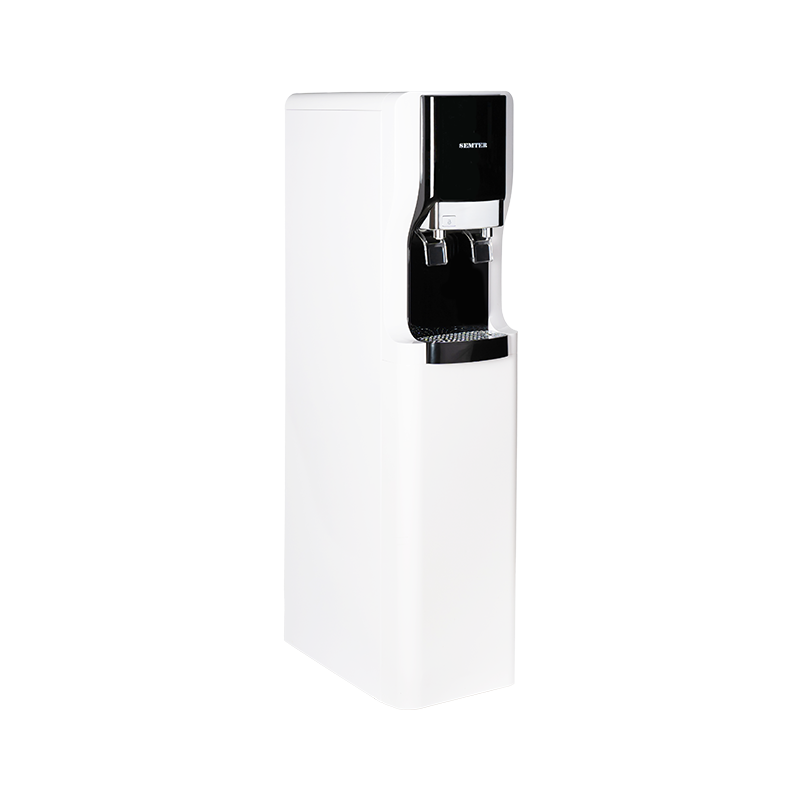
HOT PRODUCTS
Content
- 1 Why Every Office Needs a Hot and Cold Water Dispenser
- 2 Types of Office Hot Cold Water Dispensers
- 3 Key Features to Look for When Choosing an Office Water Dispenser
- 4 How to Match the Right Dispenser to Your Office Size
- 5 Installation Options: Countertop, Undercounter, or Floor-Standing
- 6 Maintenance Tips to Keep Your Office Water Dispenser Running Well
- 7 Frequently Asked Questions
Why Every Office Needs a Hot and Cold Water Dispenser
A reliable office water dispenser is no longer a luxury — it is a baseline expectation in any professional environment. Studies consistently show that proper hydration improves concentration, reduces fatigue, and supports overall employee well-being. When staff have instant access to both hot and cold water at their workstation or break room, they drink more throughout the day without leaving the premises for beverages.
Beyond individual health, a hot and cold water dispenser reduces dependence on single-use plastic bottles and eliminates the cost and logistics of bottled water delivery. For office managers and procurement teams, this translates into measurable savings — both financial and operational — while supporting corporate sustainability goals.
The combination of instant hot and cold output in a single unit also streamlines the kitchen area. Employees can prepare tea, coffee, instant soups, or chilled drinks from one appliance, removing the need for separate kettles, refrigerators, or water coolers.
Types of Office Hot Cold Water Dispensers
Not all office water dispensers are built the same. Understanding the main categories helps you match the right solution to your workplace's layout, headcount, and daily water consumption.
Countertop Models
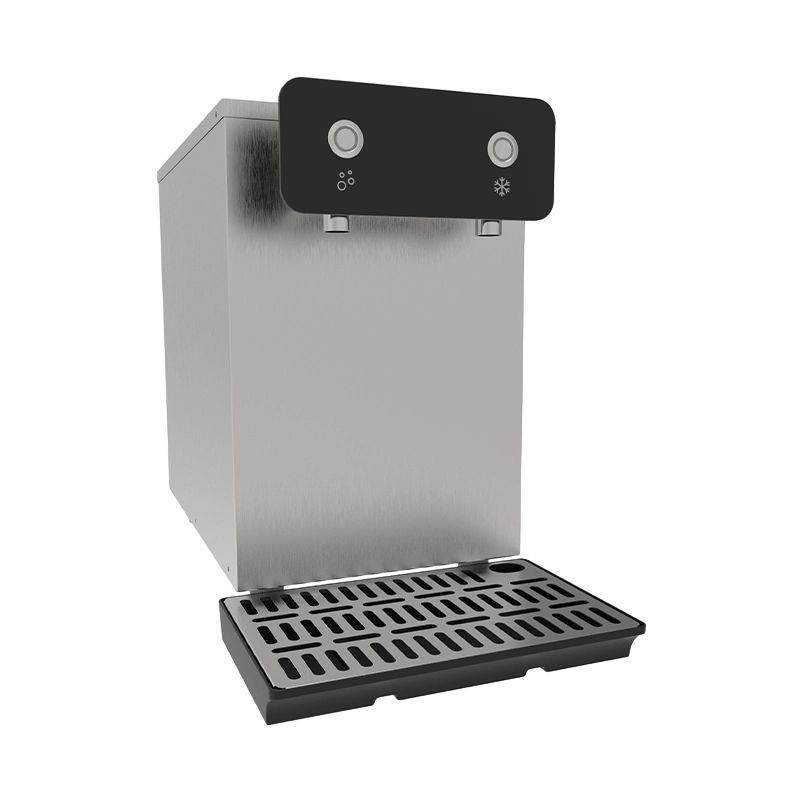
Countertop dispensers sit on a desk, kitchen counter, or utility shelf. They are ideal for smaller offices or meeting rooms where floor space is limited. Despite their compact footprint, many countertop units deliver both chilled and hot water with precise temperature control, making them a practical choice for teams of up to 20 people.
Undercounter Models
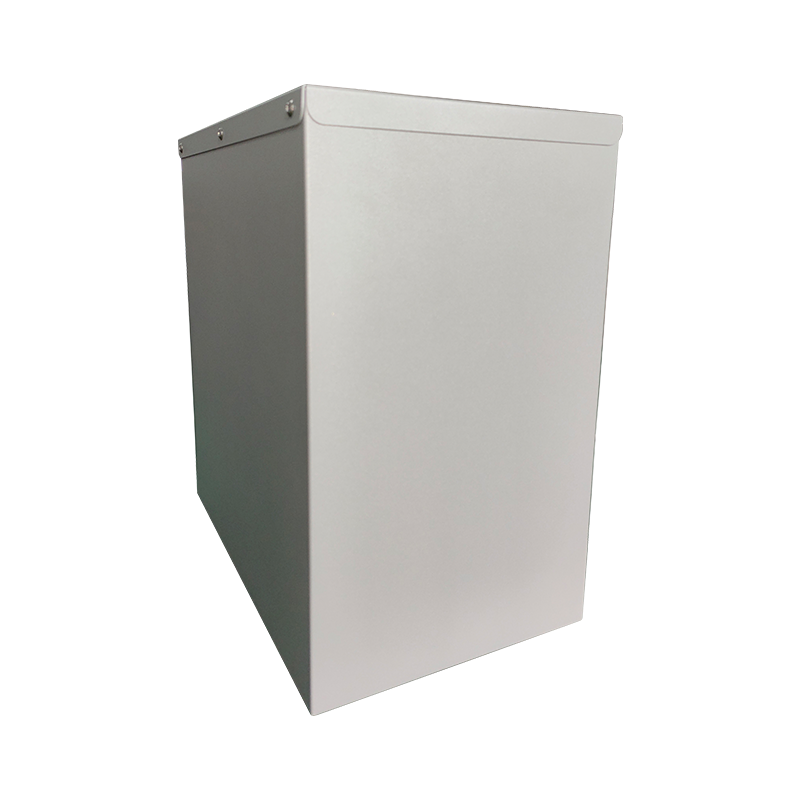
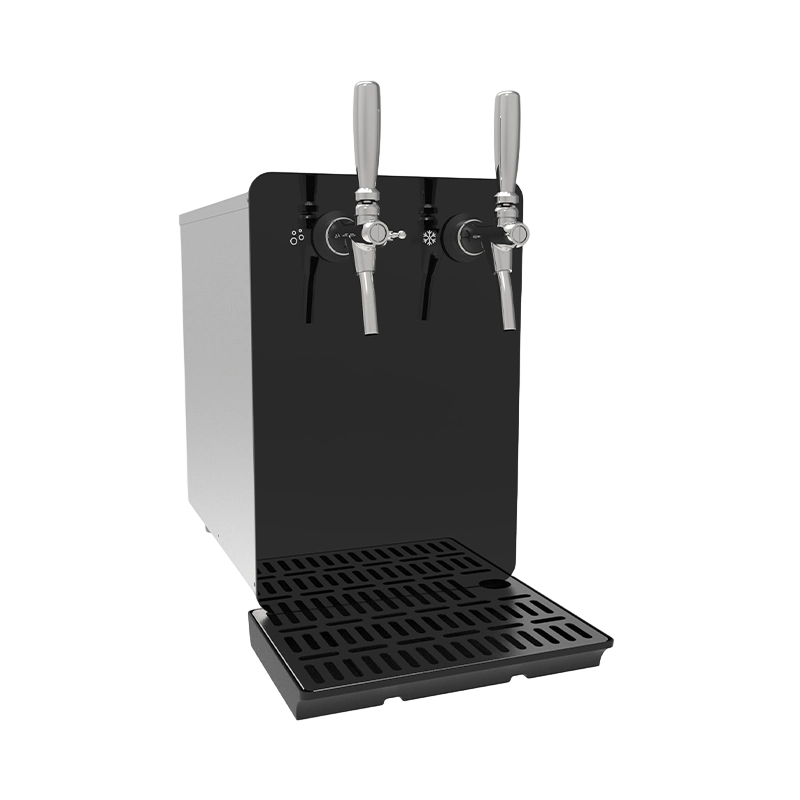
Office undercounter water dispensers are plumbed directly into the mains water supply and installed beneath a countertop, with a dedicated tap or faucet mounted above. This configuration provides a clean, uncluttered appearance and a virtually unlimited water supply — no refilling, no bottles, no interruptions. They are particularly well-suited for offices that prioritize a modern aesthetic or have a fitted kitchen setup.
Floor-Standing Models
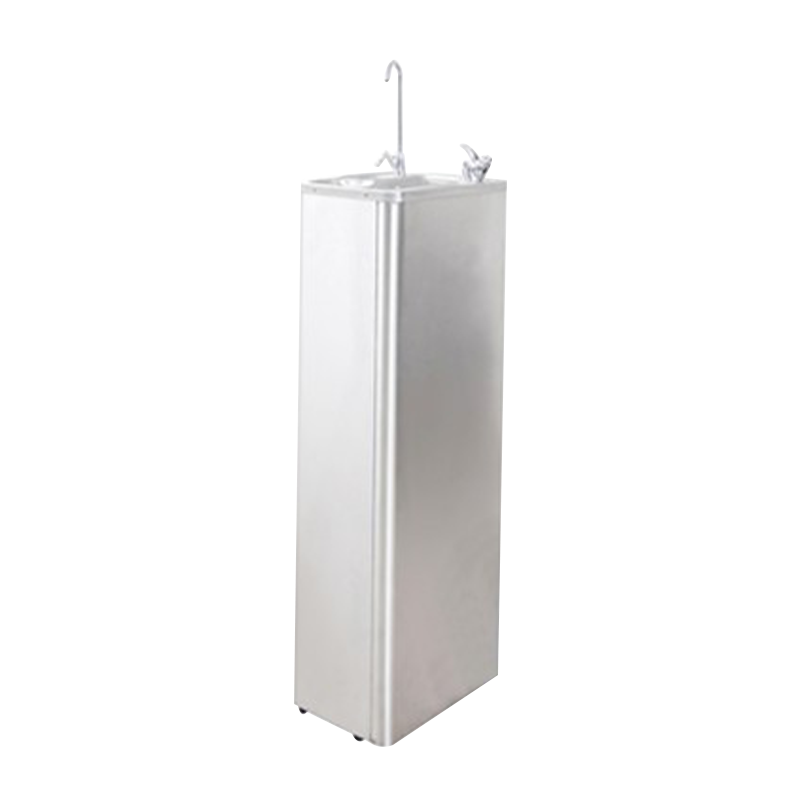
Office floor standing water dispensers are freestanding units designed for high-traffic areas such as open-plan offices, reception lobbies, or communal break rooms. Their larger tanks and higher output capacity make them the right choice for offices with 50 or more employees. Many models include touchscreen interfaces, child-safety locks on the hot tap, and energy-saving standby modes.
| Type | Best For | Water Supply | Typical Capacity |
|---|---|---|---|
| Countertop | Small offices, meeting rooms | Tank or plumbed | Up to 20 users |
| Undercounter | Fitted kitchens, modern interiors | Mains plumbed | Unlimited (mains-fed) |
| Floor Standing | Large open offices, lobbies | Tank or plumbed | 50+ users |
Key Features to Look for When Choosing an Office Water Dispenser
With a wide range of models available, focusing on the right specifications ensures your investment delivers long-term value rather than just short-term convenience.
Temperature Range and Precision
The best office dispensers offer independently adjustable hot and cold temperatures, rather than a fixed factory setting. Hot water output typically ranges from 85°C to 98°C, which is suitable for tea, coffee, and instant beverages. Cold water is generally dispensed between 4°C and 10°C. Some advanced models include a third ambient temperature option for still room-temperature water.
Built-in Filtration System
A quality filtration system is non-negotiable for offices connected to municipal water supplies. Look for units that include multi-stage filtration combining sediment pre-filters, activated carbon filters, and optionally a reverse osmosis membrane. This removes chlorine, heavy metals, and dissolved solids that affect taste and safety. UL and NSF certification on the filtration components confirms compliance with internationally recognized health standards.
Dispensing Interface
Touch-button and touchscreen interfaces are increasingly common in office-grade dispensers. They allow precise volume control, temperature selection, and mode switching. For environments with children or visitors, hot water safety locks — which require a deliberate two-step action to dispense — are an important safety consideration.
Energy Efficiency
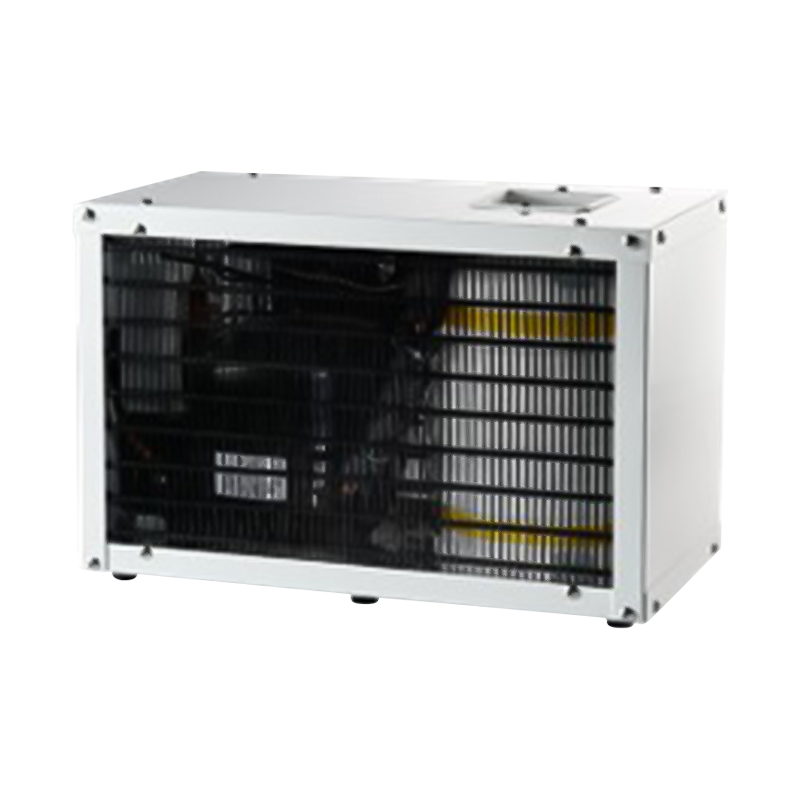
Office water dispensers run continuously, so energy consumption matters. Look for models with scheduled standby or sleep modes that reduce power draw during off-hours. Dry cooling systems and well-insulated tanks help maintain water temperature without constant energy input, lowering both operating costs and environmental footprint.
Build Quality and Certifications
For international procurement, certifications such as CE (Europe), UL (North America), CB, and NSF provide assurance that the product has been independently tested for electrical safety and water contact material compliance. Stainless steel internal components resist corrosion and bacterial buildup far better than plastic alternatives.
How to Match the Right Dispenser to Your Office Size
Sizing a water dispenser correctly prevents two common problems: units that run out of cold water during peak hours, and oversized machines that consume unnecessary energy in a small team environment. A practical rule of thumb is to calculate approximately 0.5 litres of drinking water per employee per hour during working hours, then factor in additional usage from hot beverages.
- 1–15 employees: A countertop unit with a cold output of 5–8 litres per hour is typically sufficient.
- 15–50 employees: An undercounter or mid-capacity floor-standing unit with 10–15 litres per hour cold output handles peak demand without interruption.
- 50+ employees: High-capacity floor-standing dispensers or multiple strategically placed units are recommended to avoid bottlenecks at busy break periods.
For large offices spread across multiple floors or departments, placing one unit per 25–30 staff members at accessible points reduces walking time and encourages consistent hydration habits.
Installation Options: Countertop, Undercounter, or Floor-Standing
Installation requirements vary significantly by dispenser type, and understanding them upfront avoids unexpected costs or workflow disruptions during setup.
Countertop Installation
Countertop models are the simplest to deploy. Most require only a standard power outlet and, for tank-based units, periodic manual refilling. Plumbed countertop models need a cold water supply line nearby but require no structural modification. Setup time is typically under 30 minutes.
Undercounter Installation
Office countertop water dispensers and undercounter units connected to mains supply require a licensed plumber for the water line connection and a qualified electrician if dedicated circuit wiring is needed. The tap or faucet is typically surface-mounted through a drilled countertop hole. Once installed, these units are maintenance-light and operationally seamless — no bottles to swap, no tank to refill.
Floor-Standing Installation
Freestanding units are the most flexible in terms of placement — they can be relocated as office layouts change. Plumbed floor-standing models need a water connection and drain line, while bottled or tank-fed versions simply plug in and go. Positioning near a sink or utility outlet simplifies both water supply and drainage.
Maintenance Tips to Keep Your Office Water Dispenser Running Well
Consistent maintenance preserves water quality, extends equipment lifespan, and ensures the dispenser complies with workplace health standards. The following practices apply to most office hot and cold water dispensers.
- Filter replacement: Follow the manufacturer's recommended interval, typically every 3–6 months depending on water quality and usage volume. Many models include a filter change indicator on the display panel.
- Internal sanitization: Descale the hot water tank and cold water reservoir every 3–6 months using a food-safe descaling solution to prevent limescale buildup, especially in hard water areas.
- External cleaning: Wipe down the tap, drip tray, and exterior surfaces weekly with a damp cloth and mild disinfectant. The drip tray should be emptied and cleaned daily in high-usage environments.
- Annual service inspection: For high-capacity or plumbed models, a professional service check covering seals, valves, and cooling components once a year prevents unexpected breakdowns.
Keeping a simple maintenance log — noting filter change dates, cleaning schedules, and any reported issues — helps facility managers stay on top of the unit's condition and provides a useful record for warranty or service claims.
Frequently Asked Questions
What is the difference between a plumbed and a bottled office water dispenser?
A plumbed dispenser connects directly to the mains water supply, providing an unlimited flow of filtered hot and cold water without manual intervention. A bottled dispenser relies on replaceable water bottles (typically 18.9L) placed on or inside the unit. Plumbed models have lower long-term operating costs and eliminate the labour of bottle handling, while bottled models are more flexible in locations without accessible plumbing.
How often should office water dispenser filters be replaced?
Most manufacturers recommend replacing filters every 3 to 6 months, or after a specified volume of water has passed through — commonly between 1,500 and 3,000 litres. In offices with high usage or poor source water quality, more frequent replacement may be necessary to maintain taste and safety standards.
Is it safe to use a hot and cold water dispenser without a built-in filter?
In regions with very high-quality municipal water, a filter-free unit may meet basic safety thresholds. However, a built-in filtration system is strongly recommended for all office environments. Filtered water tastes better, removes residual chlorine and sediment, and gives employees confidence in the water quality. NSF-certified filtration provides independently verified assurance of contaminant removal.
Can office water dispensers dispense sparkling water as well?
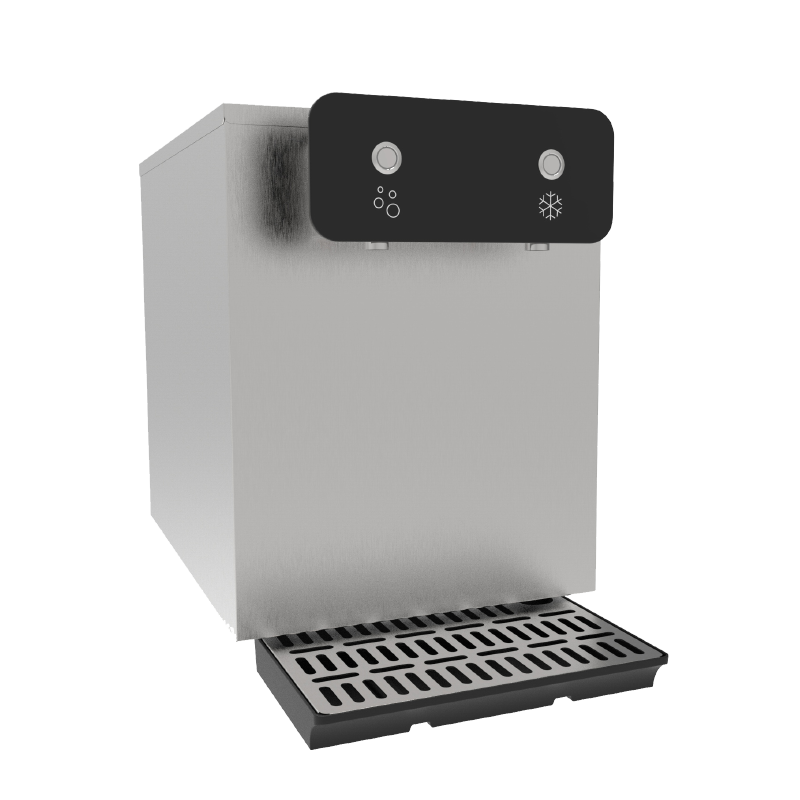
Yes. A growing number of office dispensers are designed to deliver still cold water, ambient water, hot water, and sparkling water from a single unit. These multi-function models connect to a CO2 cylinder to carbonate water on demand, eliminating the need for canned or bottled sparkling water. They are especially popular in hospitality-focused office environments and co-working spaces.

-1.png "3-Mode Undercounter Sparkling Water Dispenser")
 ADDRESS
 CONTACT
 EMAIL
EMAIL