




 Language
 English
 Español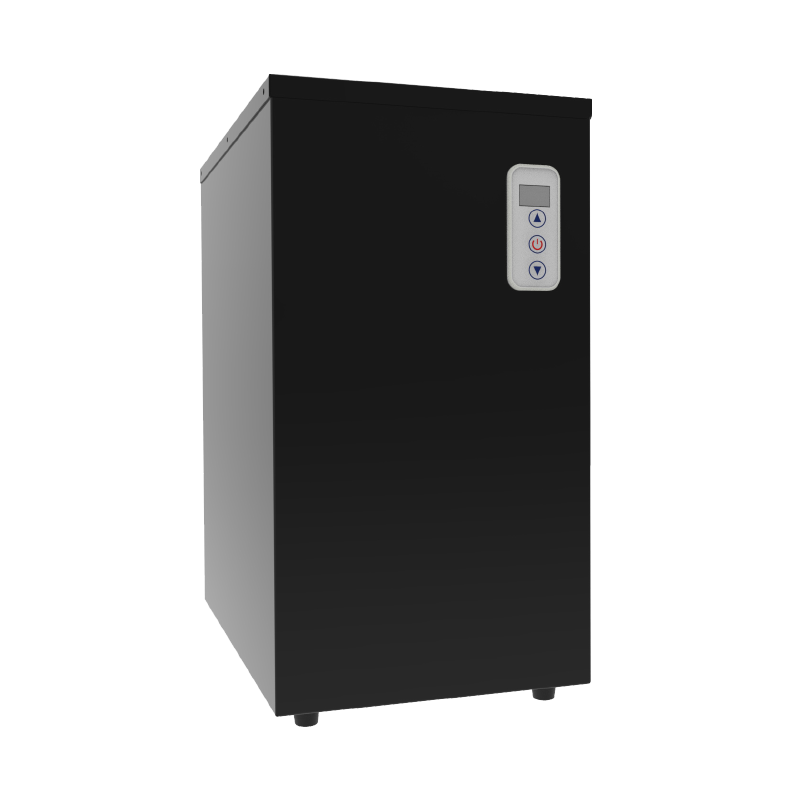
HOT PRODUCTS
Content
- 1 Why Durability Is the First Spec to Check
- 2 The High-Traffic Environment: What Your System Is Actually Up Against
- 3 Key Durability Specifications to Evaluate
- 4 Installation Format and Its Impact on Long-Term Reliability
- 5 Maintenance Accessibility: The Overlooked Durability Factor
- 6 Water Quality and Filtration: Protecting Components from the Inside
- 7 Commercial vs. Office Environments: Different Traffic, Different Requirements
- 8 Certifications and Compliance: What They Signal About Build Quality
- 9 Total Cost of Ownership: Why Upfront Price Is the Wrong Metric
- 10 Questions to Ask Any Supplier Before Purchasing
Why Durability Is the First Spec to Check
In high-traffic environments — hotel lobbies, corporate cafeterias, hospital waiting areas, or busy restaurant floors — a sparkling water system faces stresses that a household unit simply never encounters. We're talking about hundreds of dispense cycles per day, continuous operating hours, and users who aren't always careful with equipment. Under these conditions, a system that hasn't been engineered for commercial duty will start showing wear within months: loose tap fittings, inconsistent carbonation pressure, cooling components that overheat, or housings that crack from repeated contact.
From our manufacturing experience, the single most common reason buyers replace a sparkling water system early is that they selected a unit based on price or aesthetics without verifying its duty-cycle rating and component-grade specifications. This guide walks you through the practical factors that determine long-term durability in high-demand settings, so you can make a sourcing decision you won't revisit in 18 months.
The High-Traffic Environment: What Your System Is Actually Up Against
Before evaluating any product, it helps to quantify the load. Consider a mid-size hotel with 150 rooms. If the breakfast buffet serves 200 guests over a two-hour window, and 60% request sparkling water, that's roughly 120 dispense events in 120 minutes — one per minute at peak. A busy office floor with 80 employees may see 150–200 uses per day. A hospital dining facility can exceed 300 daily cycles across a single unit.
These numbers matter because component wear is cumulative. The parts most vulnerable under high-cycle conditions include:
- Tap valves and actuators (subject to mechanical fatigue from repeated actuation)
- Carbonation chambers and pressure seals (stress from continuous CO₂ cycling)
- Cooling systems (risk of thermal fatigue under near-continuous demand)
- Water contact surfaces (mineral buildup and biofilm risk in hard-water regions)
- External housing and drip trays (impact and corrosion from a busy service environment)
A system rated for commercial high-traffic use should be designed with each of these failure points in mind — not as an afterthought, but as a core engineering requirement.
Key Durability Specifications to Evaluate
Not all spec sheets are created equal. Here are the technical parameters that genuinely indicate whether a sparkling water system will hold up in a demanding setting.
Duty Cycle and Rated Daily Output
A duty cycle describes how intensively a machine can operate before it needs a rest period. A consumer unit might be rated for intermittent use — perhaps 20–30 dispenses per day. A commercial-grade system should carry a continuous or near-continuous duty-cycle rating. Look for a stated daily output capacity (e.g., 100L/day or 200L/day) and verify that it aligns with your estimated peak demand, with a 20–30% buffer. Running any system at 100% capacity every day accelerates wear significantly compared to running it at 70–75%.
Construction Materials
The body material of a dispenser tells you a lot about its lifespan. Stainless steel (typically 304-grade or higher) is the standard for commercial food-service equipment because it resists corrosion, handles repeated cleaning with commercial detergents, and doesn't harbor bacteria in the same way plastics can. Internal water pathways should also be food-grade stainless or medical-grade silicone tubing — not commodity PVC, which can degrade under sustained pressure and temperature variation.
Avoid units that use plastic housings with a stainless-look finish. These are often designed for semi-commercial or premium residential applications, not genuine high-traffic duty.
Carbonation System Design
The carbonation mechanism is the heart of any sparkling water system, and it's where quality divergence is most pronounced. Inline carbonation systems — where water is carbonated on demand as it passes through a pressurized CO₂ chamber — tend to deliver more consistent carbonation levels than tank-based systems, and they handle variable demand better. For high-traffic environments, look for systems with adjustable carbonation levels (typically 2–8 g/L CO₂) and precise pressure regulators that maintain output consistency even as the CO₂ cylinder depletes.
Cooling Capacity and Thermal Management
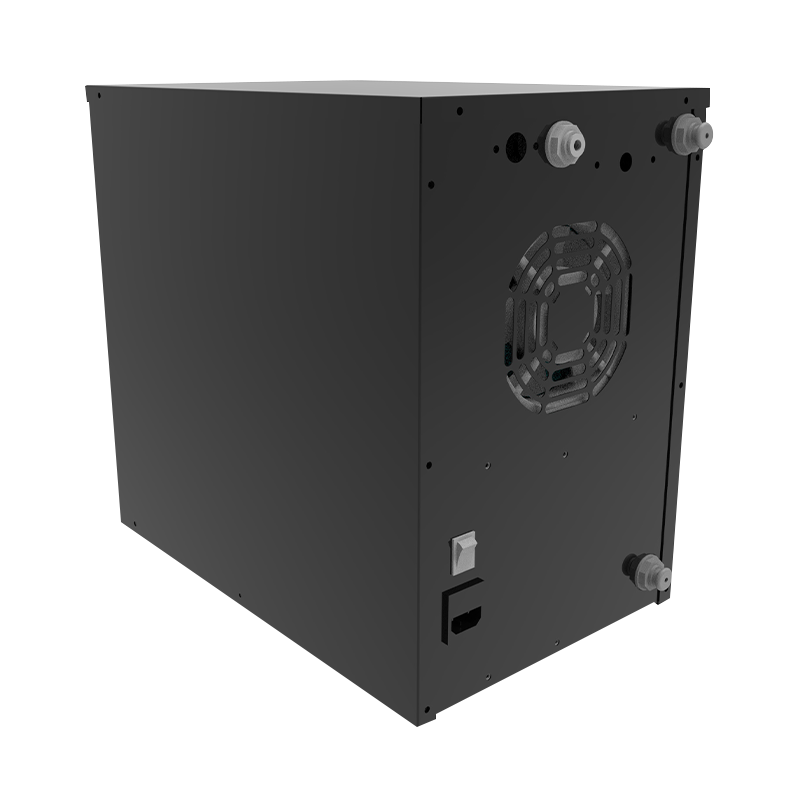
In high-volume use, the cooling system is under near-constant load. A unit that can chill water to 4–8°C under light household use may struggle to maintain those temperatures during a lunchtime rush. Commercial-grade cooling systems use larger compressors, better thermal insulation, and heat dissipation designs (such as rear or bottom ventilation) that prevent overheating. Check the ambient temperature rating — a system rated to operate in environments up to 32°C or 38°C is better suited to warm service areas than one rated to only 25°C.
Tap and Valve Quality
Taps and dispensing valves are the highest-contact point on any water dispenser — and the most frequently replaced component on under-specified units. Lever-type or push-button actuators with ceramic disc valves outlast rubber-seated valves by a significant margin in high-cycle applications. Some commercial systems also use magnetic or electronic actuators that eliminate mechanical wear almost entirely. If a supplier cannot tell you what material the valve seats are made from, that's a red flag.
Installation Format and Its Impact on Long-Term Reliability
Durability isn't only about the unit itself — the installation format significantly affects how reliably a system performs over time. The three main formats for high-traffic commercial deployment each carry different maintenance and longevity implications.
| Format | Best Fit | Durability Advantage | Key Consideration |
|---|---|---|---|
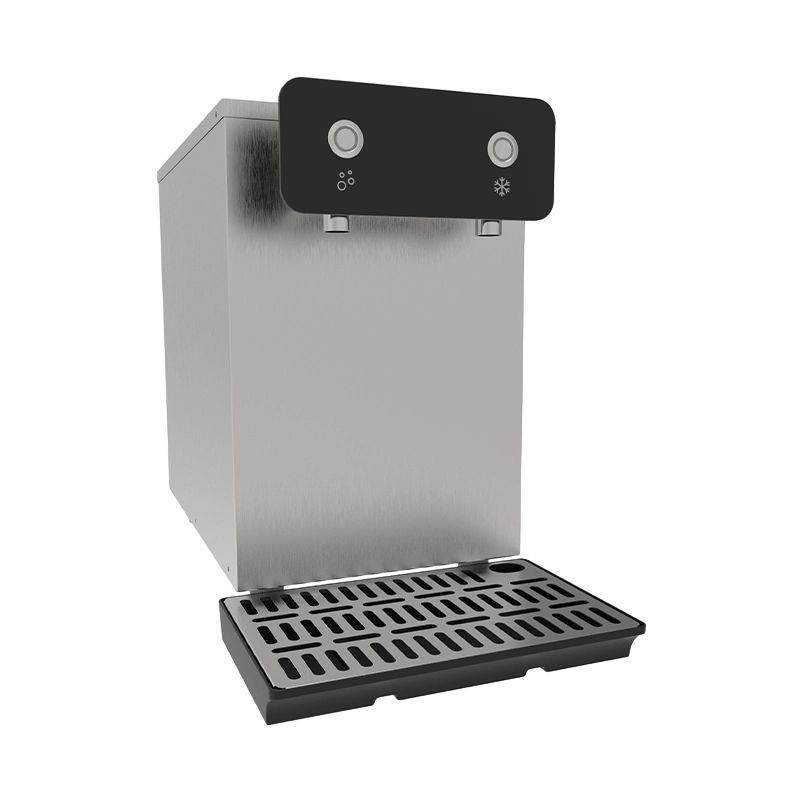
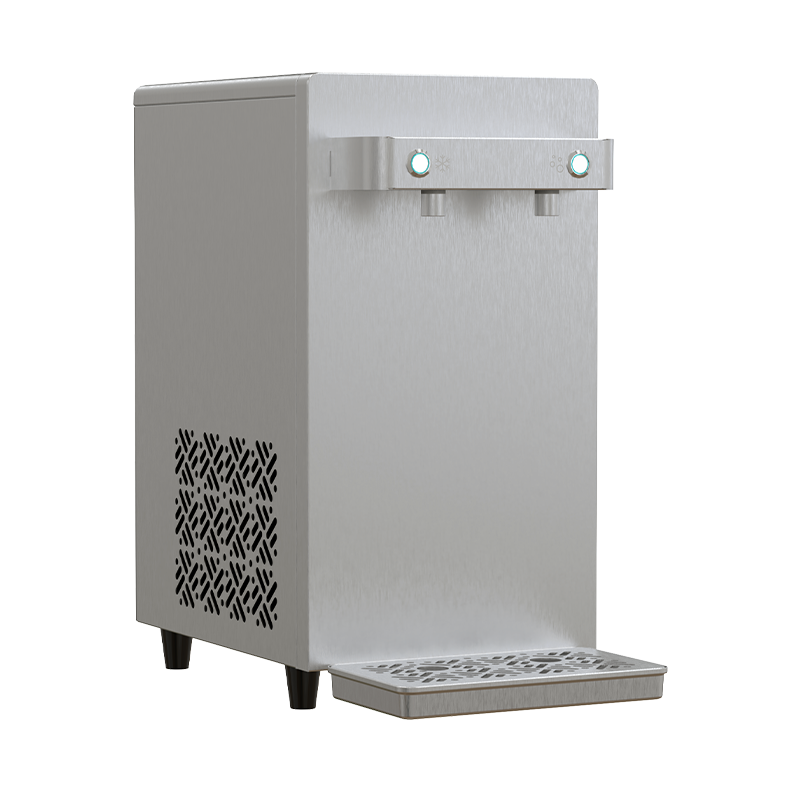
| Countertop | Cafés, reception desks, small offices | Easy to service and relocate; accessible components | Requires stable counter surface; prone to external impact |
| Undercounter | Restaurants, hotel bars, corporate kitchens | Protected from physical contact; plumbed-in stability | Requires professional installation; less accessible for quick checks |
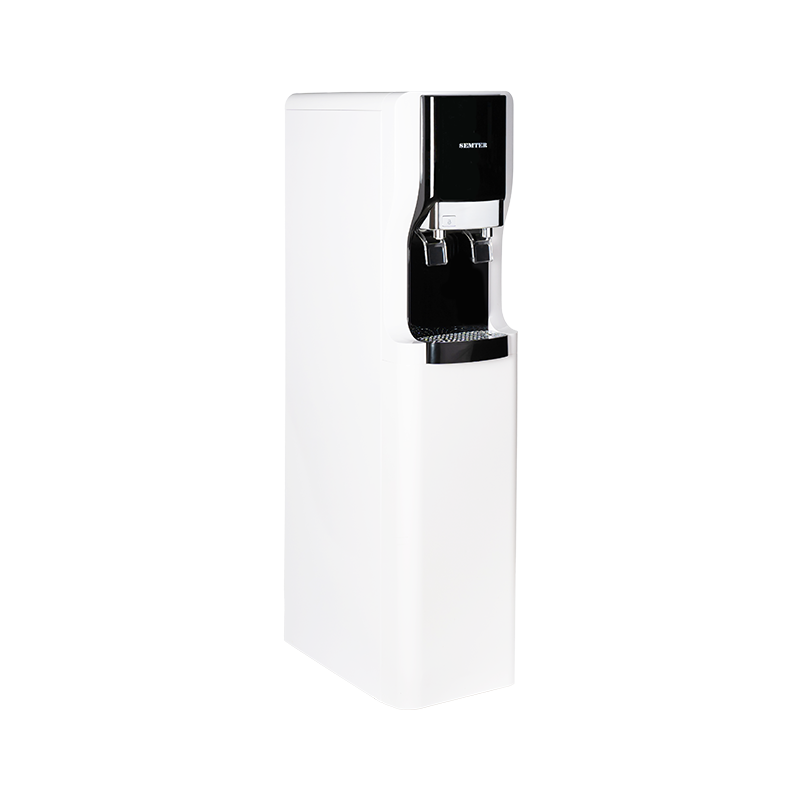
| Floor Standing | Hotel lobbies, large dining areas, hospitals | High-capacity; self-contained; minimal cabinetry dependency | Requires floor space planning; ventilation clearance important |
| Wall Mounted | Gyms, corridors, high-footfall public spaces | Fully elevated from floor contact; compact footprint | Requires structural wall support; plumbing access needed |
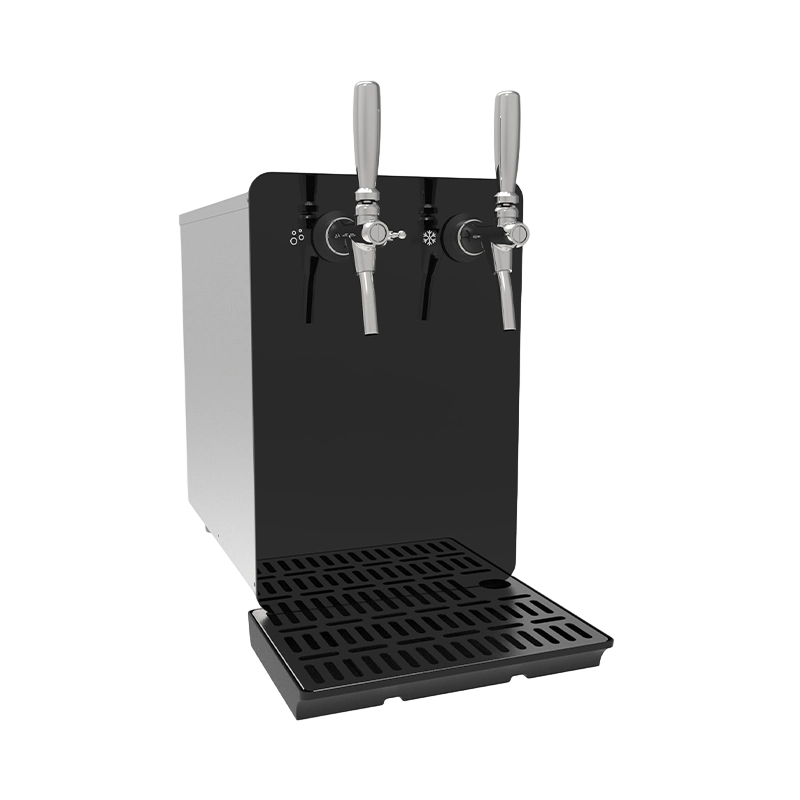
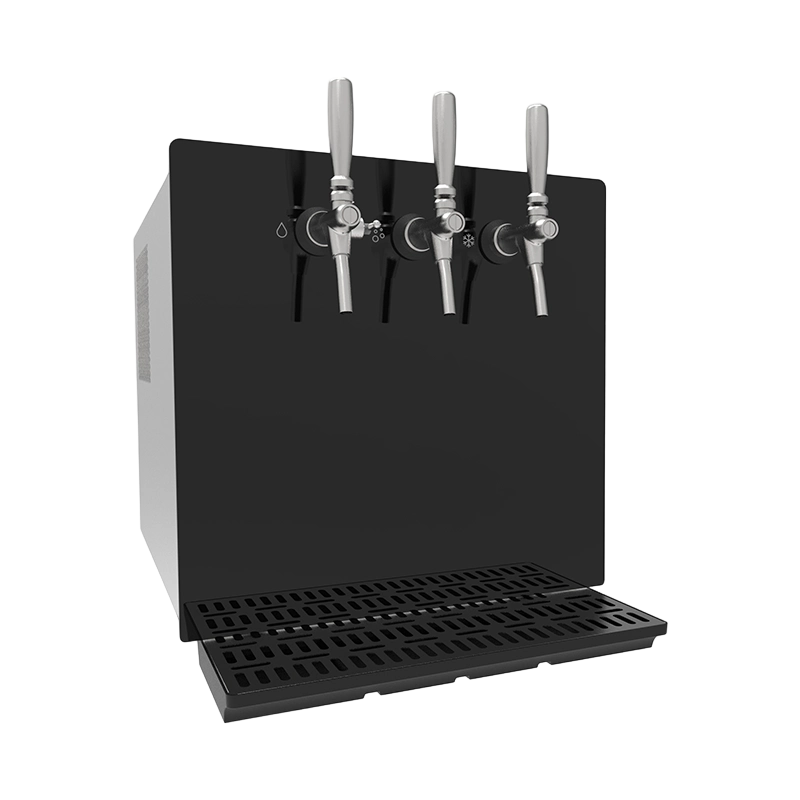
For the most demanding environments, undercounter and wall-mounted formats generally deliver the best long-term reliability because the core components are protected from incidental contact, spills, and environmental fluctuation. Our commercial sparkling water dispenser series covers all four installation formats, designed specifically for HoReCa and other high-demand commercial settings.
Maintenance Accessibility: The Overlooked Durability Factor
A durable system is only as good as its ability to be maintained. In high-traffic environments, downtime is costly — a sparkling water dispenser that takes four hours to service because components are difficult to access will accumulate more real-world downtime than a technically inferior unit that can be serviced in 20 minutes by on-site staff.
When evaluating a system, ask about the following maintenance tasks and how long each typically takes:
- CO₂ cylinder replacement — should take under 5 minutes without tools
- Filter cartridge replacement — ideally tool-free, with a clear indicator for replacement intervals
- Drip tray and nozzle cleaning — daily in high-traffic use; should be dishwasher-safe or rinse-clean
- Internal sanitization cycle — frequency depends on water quality; look for systems with a self-sanitizing or rinse-through mode
- Carbonation level recalibration — should be operator-adjustable without calling a technician
Systems with modular, front-access service panels dramatically reduce maintenance time compared to those requiring rear disassembly. This isn't a luxury feature — in a busy service environment, it directly affects how consistently the unit is kept in optimal condition.
Water Quality and Filtration: Protecting Components from the Inside
Hard water is one of the most underestimated threats to sparkling water system longevity. In regions where water hardness exceeds 200 mg/L (roughly 200 ppm), scale deposits can accumulate inside carbonation chambers, cooling coils, and flow sensors within a matter of weeks under high-volume use. Limescale buildup reduces cooling efficiency, restricts flow rates, and in severe cases can cause pressure valve failures.
A properly specified system for hard-water environments should include:
- An inline scale-reduction filter (polyphosphate dosing or ion-exchange cartridge) as standard or available as an accessory
- Stainless steel or PVDF internal pathways that resist scale adhesion better than standard metal alloys
- A filter change indicator — visual or electronic — rather than relying solely on scheduled replacement
- Accessible descaling ports for periodic chemical cleaning without full disassembly
If you operate in an area with known hard water, this is not optional — it's a prerequisite for achieving the system's rated service life.
Commercial vs. Office Environments: Different Traffic, Different Requirements
Not all high-traffic settings are the same, and it's worth distinguishing between two common deployment scenarios: commercial hospitality (restaurants, hotels, catering) and corporate office environments. Each creates a distinct usage pattern that influences what "durable" actually means in practice.
Commercial Hospitality (HoReCa)
In a restaurant or hotel, sparkling water service is part of the product offering — it affects guest experience and revenue. Here, consistency of carbonation quality and output temperature is as important as mechanical durability. A unit that dispenses perfectly carbonated water at 6°C for the first 50 serves but drifts to 10°C and lower fizz by serve 80 will generate complaints even if it never mechanically fails. Spec for cooling headroom and tight carbonation pressure tolerances (±0.2 bar).
Corporate Office Settings
Office deployments typically see burst-pattern demand — high usage at 9–10am, lunch, and mid-afternoon, with quieter periods between. The primary durability concerns here are ease of maintenance (since there may not be dedicated facilities staff), hygiene compliance, and low noise operation. A unit that disrupts an open-plan office with a loud compressor cycle will create friction regardless of its technical performance. Our office sparkling water dispenser range is designed with these specific workplace considerations in mind.
Certifications and Compliance: What They Signal About Build Quality
Third-party certifications are a practical proxy for build quality, particularly when you're sourcing from a manufacturer you haven't worked with before. The certifications most relevant to commercial sparkling water systems in high-traffic settings include:
- NSF/ANSI 61 — certifies that water contact materials don't leach contaminants, critical for potable water equipment
- CE marking — confirms the product meets EU safety, health, and environmental standards; required for European markets
- WRAS approval — Water Regulations Advisory Scheme; required or strongly preferred for plumbed-in water fittings in the UK
- ISO 9001 — indicates the manufacturer operates a documented quality management system; correlates with consistent production standards
- Energy efficiency ratings — particularly relevant for units that run continuously; an energy-rated unit typically uses better-grade compressor and insulation components, which also affects longevity
A supplier who cannot produce documentation for these certifications on request is a supplier worth approaching with caution — not because the product is necessarily inferior, but because the absence of documentation makes it impossible to verify quality claims independently.
Total Cost of Ownership: Why Upfront Price Is the Wrong Metric
Buyers who focus on purchase price when selecting a sparkling water system for high-traffic use frequently discover that the cheaper option costs more over a three-year horizon. A realistic total cost of ownership (TCO) model should account for:
- Purchase price and installation cost
- Consumables: CO₂ cylinders, filter cartridges, and their replacement frequency
- Energy consumption (a unit drawing 150W versus 90W costs meaningfully different amounts over 8,760 operating hours per year)
- Maintenance labor — either in-house time or third-party service call fees
- Downtime cost — lost productivity or lost revenue during service periods
- Replacement timeline — a unit lasting 7 years versus 3 years has a very different annualized cost
In most high-traffic deployments, a system that costs 40–50% more upfront but lasts twice as long with lower maintenance frequency will deliver a lower total cost of ownership by year two. We find this calculation is the most persuasive data point we can share with buyers who are initially focused on unit price alone.
Questions to Ask Any Supplier Before Purchasing
To close, here is a practical checklist of questions that will quickly surface whether a sparkling water system is genuinely built for high-traffic durability or simply marketed as such:
- What is the rated daily output capacity, and at what ambient temperature?
- What materials are used for the body, internal water pathways, and tap valve seats?
- What certifications does the unit hold, and can documentation be provided?
- What is the recommended filter replacement interval under commercial use conditions?
- Is the carbonation level adjustable by the operator, and within what range?
- What warranty is offered, and does it differentiate between commercial and residential use?
- Are spare parts (valves, seals, filter housings) available and stocked, and what is typical lead time?
- Can you provide a reference site or installation of comparable traffic volume?
A supplier with well-engineered, genuinely commercial-grade products will answer all of these confidently. Hesitation or vagueness on any of these points — particularly materials, certifications, and spare parts availability — should factor into your evaluation. Selecting the right system from the start is always less expensive than replacing a premature failure in year two of a high-traffic deployment.


 ADDRESS
 CONTACT
 EMAIL
EMAIL